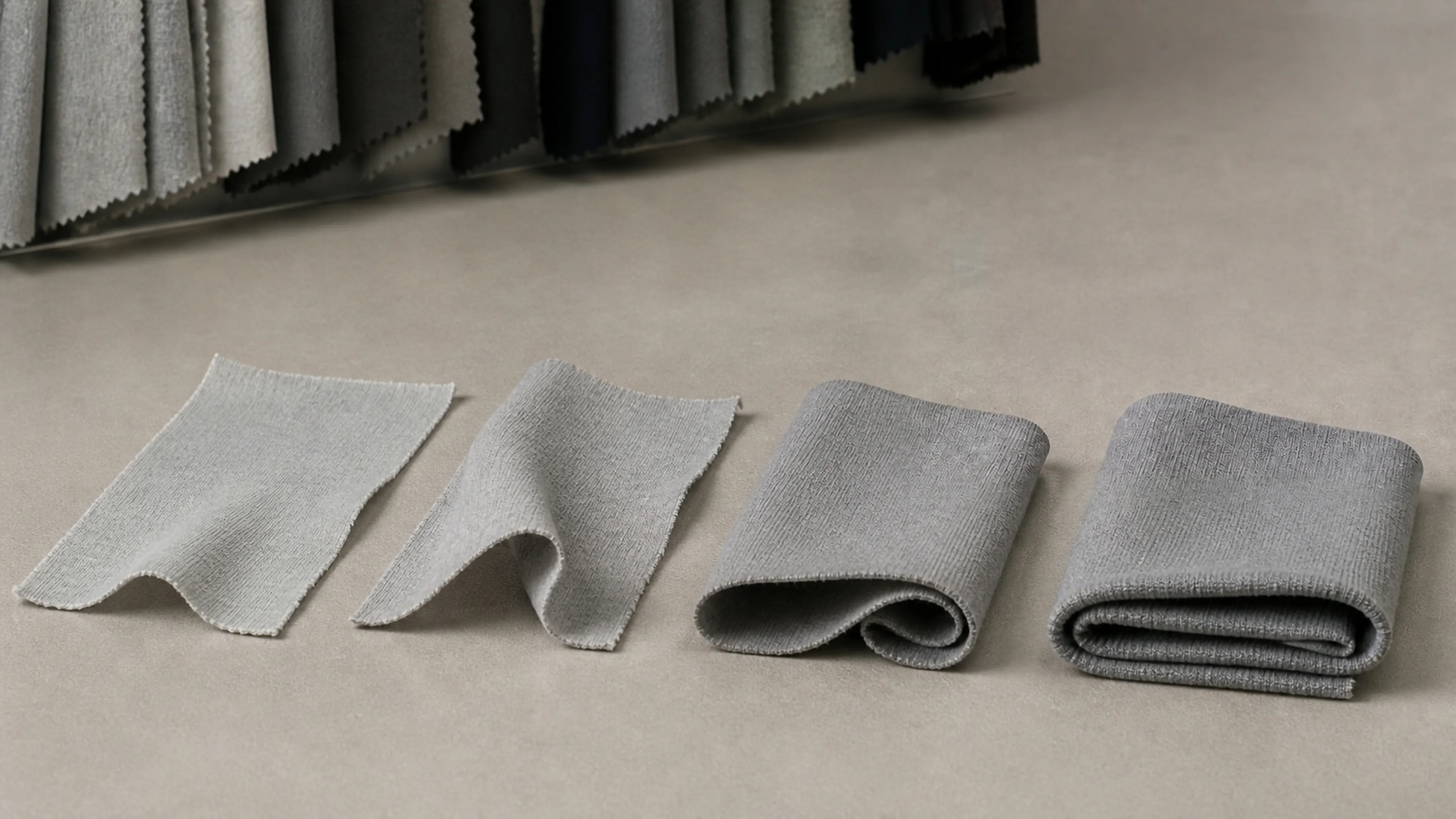
Learn what GSM means in clothing and what fabric weight can and cannot tell buyers comparing T-shirts for decoration and wholesale programmes.
GSM means grams per square metre. It describes the mass of a fabric over a standard area, giving buyers one useful way to compare T-shirt fabrics. It does not, by itself, tell you whether a garment is soft, durable, opaque, breathable or well made.
What a GSM number actually describes
A 240 GSM jersey has more mass per square metre than a 180 GSM jersey. That difference does not, by itself, determine drape, thermal behaviour, comfort, durability or quality. The wearer experiences the complete garment: fibre, yarn, knit density, finishing, colour process, pattern and construction all matter.
Two fabrics with the same GSM may feel different because one uses a different yarn count, knit structure or finish. A dense surface may appear smoother; a looser construction may feel softer or more open. Ask for a physical sample when hand feel and opacity are important.
For hoodies and crewnecks, compare the inner finish as well as the weight. The French terry vs fleece guide explains loopback and brushed sweatshirt fabrics, and which sample details to review before choosing between them.
Approximate T-shirt planning examples
| Approximate fabric-weight example | Possible T-shirt planning direction | Questions to verify |
|---|---|---|
| Under 160 GSM | Example starting point for a lower-mass T-shirt fabric brief | Opacity, recovery, seam stability and print show-through |
| 160–199 GSM | Example starting point for a middle fabric-weight comparison | Surface, drape, shrinkage, colour and intended decoration |
| 200–239 GSM | Example starting point when the brief calls for more fabric mass | Drape, structure, fit balance and curing requirements |
| 240 GSM and above | Example starting point for a higher-mass T-shirt fabric brief | Drape, neck construction, fit and sample proportions |
These approximate bands are T-shirt planning examples, not industry standards, quality grades or performance guarantees. They are conversation starters only and should not replace product-specific specifications or physical samples. A lower or higher number can both be appropriate when it matches the intended garment.
Compare composition and yarn with weight
Cotton, polyester and blended fibres behave differently. Cotton jersey is common for blank T-shirts and many decoration methods, while blends can change recovery, moisture behaviour, colour appearance and heat sensitivity. Yarn type and finishing can affect surface smoothness and perceived softness.
Ask for:
- fibre composition and relevant blend percentages;
- knit structure, such as single jersey or another construction;
- colour or dye process where it affects appearance;
- shrinkage direction and care context;
- surface or hand-feel description;
- the approved product sample that the specification refers to.
Match GSM to fit and silhouette
Fabric weight should support the intended pattern. A boxy T-shirt may use a more substantial jersey to hold its silhouette, but measurements, shoulder shape, sleeve proportions and neck rib still create the fit. A lightweight fabric can work for a relaxed style when the pattern and construction are designed around its drape.
Use the apparel size guide to compare garment measurements instead of assuming that a heavier T-shirt is automatically looser or larger.
Match the fabric to decoration
Screen printing, embroidery, digital printing and heat transfer place different demands on the surface. Review artwork coverage, colour, placement and intended hand feel on the actual garment.
- Large screen prints can change surface feel and breathability.
- Dense embroidery can distort lightweight or unstable jersey without the right backing and stitch plan.
- Digital printing depends on fibre, colour, pretreatment and surface.
- Heat transfer requires compatible temperature, pressure, stretch and placement.
The apparel decoration planning guide compares these decisions in more detail. Do not choose a heavier fabric only to solve a decoration issue that should instead be addressed through artwork or process development.
Review colour, opacity and shrinkage physically
Light colours, dark colours and garment-dyed effects can look and behave differently even within one product programme. Opacity depends on fibre, knit, finish, colour and fit tension as well as GSM. Shrinkage and dimensional change should be evaluated using the intended care method and a clear measurement record.
For wholesale blank apparel, browse the blank apparel range and compare available colours and sizes on the relevant category and product pages. Product pages should state the planned specification and available concepts without turning one GSM value into a universal performance claim.
Buyer checklist for comparing T-shirts
- Confirm the stated GSM refers to the fabric, not the complete garment.
- Compare composition, knit structure, finish and colour process.
- Review the actual fit and measurement chart.
- Hold the fabric against light and inspect surface consistency.
- Test the intended decoration at realistic artwork size.
- Record the approved colour, sample and care direction.
- Ask which details are development targets and which are final production specifications.
Questions to include in an enquiry
State the intended wearer, climate or season, fit direction, preferred weight range, colour, decoration, quantity and target market. If you already have a reference T-shirt, explain which qualities you want to match—weight, drape, surface, fit or construction—rather than asking for the same GSM alone.