Product decision
Know what the customer is buying: garment category, intended fit, use, price position and the details that make the product distinct.
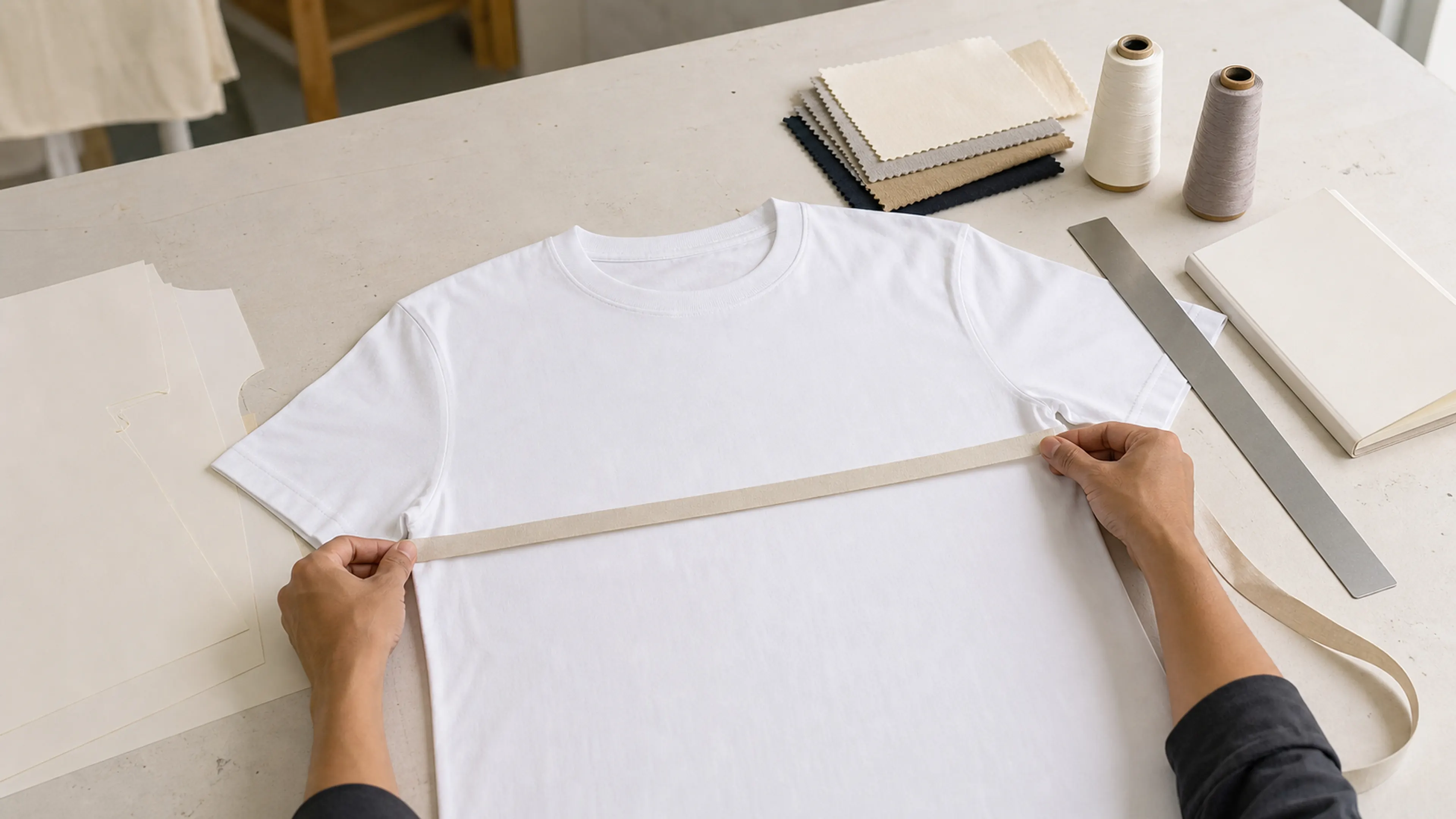
Small-batch clothing production becomes practical when the brief limits unnecessary variation across garment route, materials, colours, sizes, decoration and brand components.
DRIOV reviews these decisions together, then recommends a developed blank, a made-to-program blank or a full custom route. MOQ and timing are confirmed from the actual programme rather than presented as one fixed number.
A lower-complexity route can reduce development work, but it should not erase the fit, material or construction decisions that define the brand.
Keep fit and construction fixed, then add printing, embroidery, labels and packaging around the selected garment.
Review blank customization →Branded programmeConnect the garment, sample, decoration, labels, SKU data and presentation in one repeat-order record.
Review private label →Original garmentOpen pattern, fabric and construction development when the garment itself cannot remain fixed.
Review full custom →Not every field needs to be final, but the unknowns should be visible.
Prepare the tech packKnow what the customer is buying: garment category, intended fit, use, price position and the details that make the product distinct.
Bring a reference garment, sketch or tech pack plus artwork, measurements and comments that separate fixed requirements from open choices.
Share a realistic total quantity range, colour and size split, destination market and whether the first order must support repeat production.
Decide who can approve fit, colour, artwork, labels and packaging so sample feedback is consolidated rather than contradictory.
Available developed blanks, made-to-program blanks and original cut-and-sew projects have different material and setup requirements.
Dividing a small total across many colours, sizes or styles can make each production line too fragmented to run efficiently.
Artwork, colour count, placement and technique determine screens, thread, transfers, testing and handling requirements.
Custom labels, hangtags, bags, stickers and cartons can carry separate supplier minimums and artwork approvals.
Custom fabric, dyeing, washing or hardware may require a larger commitment than a developed garment already prepared for production.
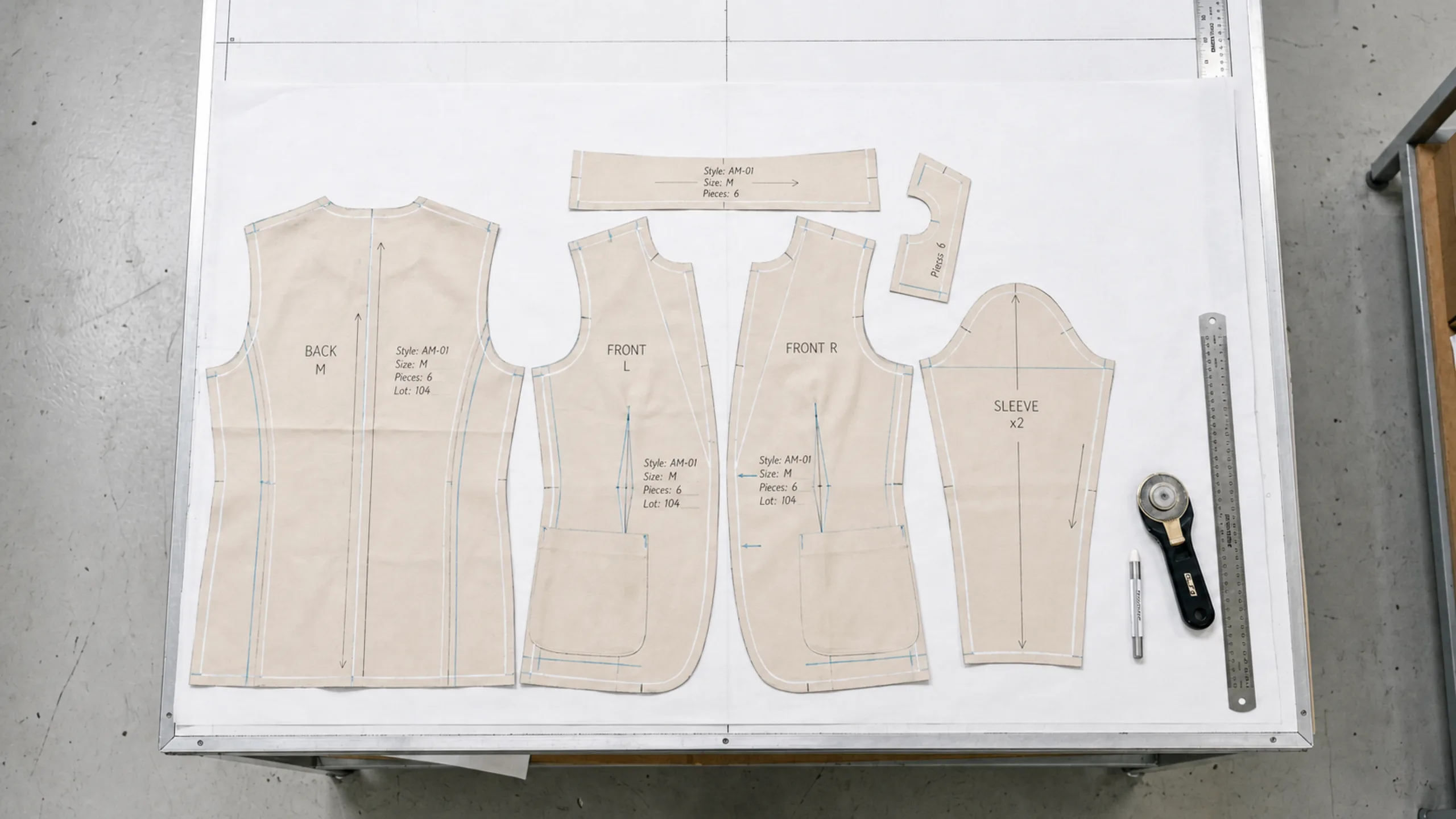
A first sample is used to review fit, measurements, construction, artwork and brand details together. Revisions should point to the correct sample and specification before production is released.
For a repeat programme, retain the accepted garment reference, colour, artwork version, labels, packaging and SKU allocation. Reconfirm availability and production conditions for the next order.
See the production processNo. The practical quantity depends on the garment route, available stock or material minimums, colours, sizes, decoration, custom components and production plan. A simpler developed-blank programme may support a different range from an original cut-and-sew product.
Choose a developed blank when its fit, fabric and construction already suit the product and the main work is decoration or branding. Choose full custom when the garment itself needs an original silhouette, material, pattern or construction.
Prepare the garment category, reference or sketch, fit direction, artwork, size range, target quantity, destination market, timing goal and the decisions that are still open. A complete tech pack can help, but a clear reviewable brief is the first requirement.
That is the aim of keeping the approved garment, artwork, labels, packaging and SKU information in one record. Availability and production conditions should still be reconfirmed for each reorder.