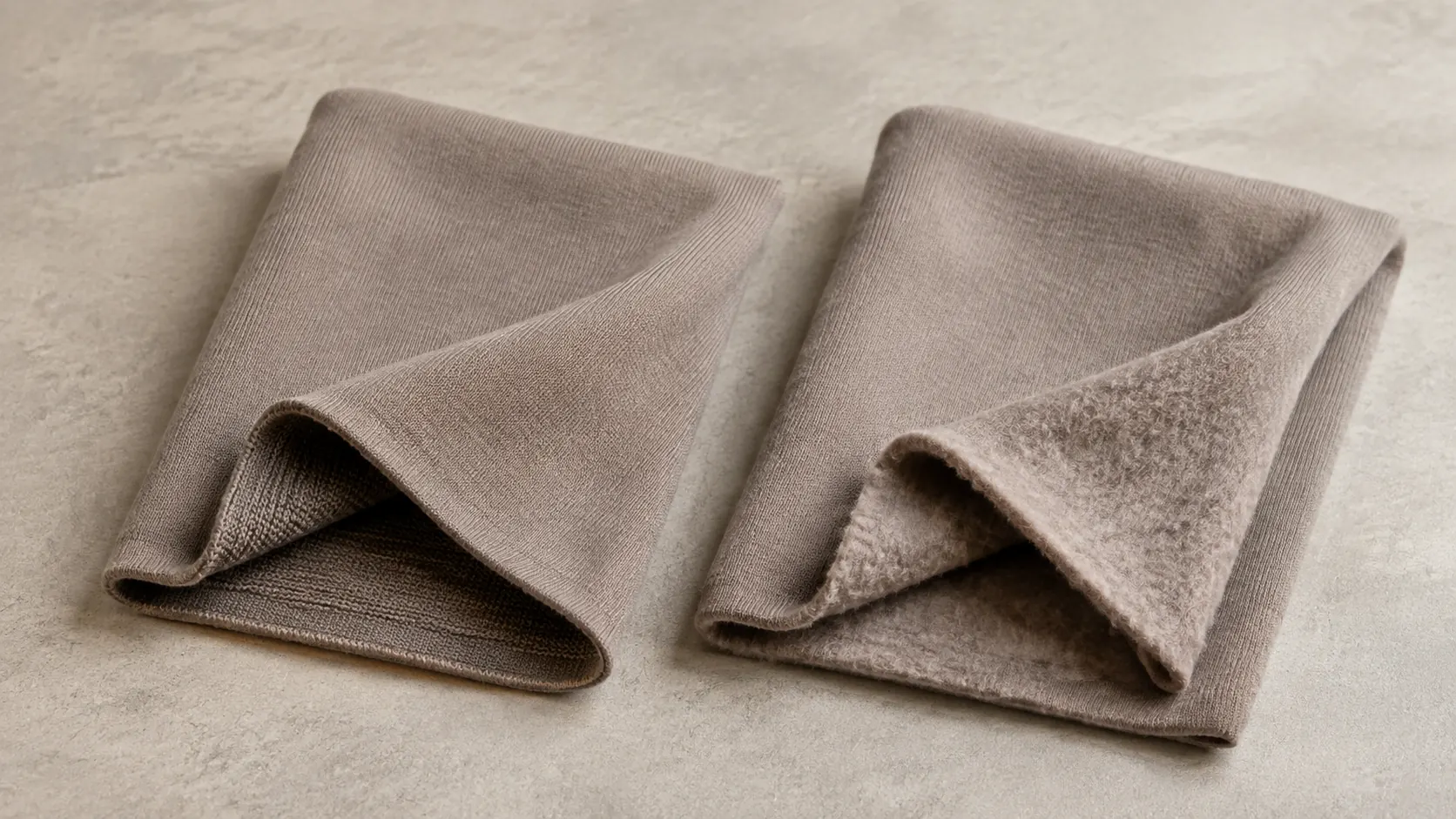
Compare French terry and brushed sweatshirt fleece by inner surface, fabric weight, fit and decoration, with a practical checklist for selecting samples.
The clearest difference between French terry and brushed sweatshirt fleece is on the inside. French terry, often called loopback, retains visible yarn loops; brushed fleece has a raised, fuzzy inner surface. Both can have a relatively smooth outer face, so an outside photograph alone may not identify the fabric.
This guide compares the knitted fabrics used for hoodies, crewnecks and sweatpants. It does not compare every material sold as fleece, such as polar fleece for outdoor layers. For a clothing brief, name the construction and inner finish alongside the fibre content, weight and intended garment.
What the fabric names tell you
French terry’s loops sit on the technical back of the knit. Sweatshirt fleece comes in different constructions, including two-end and three-end knits. Specify the construction and inner finish rather than treating every fleece fabric as the same cloth.
Napping mechanically raises surface fibres to create pile; shearing trims protruding fibres. These processes change the surface in different ways.
Neither name is a complete fibre specification. Do not assume French terry means pure cotton or sweatshirt fleece means pure polyester. Ask for the actual composition and construction of each sample.
Compare the samples side by side
- French terry / loopback: look for visible yarn loops on the inside and decide whether that unbrushed texture matches the brief.
- Brushed sweatshirt fleece: inspect the raised inner surface and decide whether its texture and loft suit the garment.
For both options, request the finished fabric GSM and composition, compare drape in a complete garment, review decoration on the actual outer face, and ask for relevant wash and appearance results.
Keep sample identification attached to the comparison. If the two options also differ in composition, weight or finishing, record those differences before attributing everything you feel to loopback or brushing.
Is fleece warmer than French terry?
Brushed fleece is a useful option to review when the brief calls for a plush inner surface and insulation. Raising fibres can create loft that holds air, but warmth also depends on the fabric’s construction and how readily air passes through it.
That does not create a universal ranking between two finished sweatshirts. A fabric name or GSM number cannot assign a comfort temperature. Compare the intended layers, wearer activity and garment coverage as part of the brief, then request relevant testing if a measurable thermal requirement matters.
GSM describes mass per unit area. It is not a warmth score or a thickness measurement. The GSM guide explains why weight must be read alongside other fabric details. Its T-shirt planning bands should not become automatic sweatshirt specifications.
Choose the garment shape as well as the fabric
A swatch helps you compare surfaces, but a garment sample shows how the fabric works with the pattern. Look at the shoulder, sleeve, body and hem together. For a hoodie, also review the hood’s lining, seam bulk and how it sits when worn.
If comparing an existing favourite with a proposed sample, use the same garment measurement points and record the fit you want to preserve. The apparel size guide helps separate body measurements, garment measurements and size labels. Changing fabric does not, on its own, establish an oversized or regular fit.
Review decoration on the actual outer face
An inner finish alone does not establish whether a fabric is suitable for your artwork. Give the decorator the composition, garment colour, proposed process, artwork dimensions and placement. Ask to review the chosen fabric with that combination.
Pay attention to pockets, zips, seams and layered areas that intersect the design. For embroidery, include backing and the feel of the reverse in the sample review. For printing, assess the graphic’s appearance and hand feel at its intended size. Use the decoration planning guide when comparing processes before requesting a decorated sample.
Include care and appearance in approval
Do not infer shrinkage, pilling resistance or long-term softness from the words French terry or fleece. Ask which results are available for the proposed fabric or garment, what conditions were used and which sample they describe.
Agree how the finished sample will be checked after the intended care process. Keep initial and later measurements tied to the same reference points, and review the face, inner surface, seams and trims. A swatch and a complete garment answer different questions; record which one was assessed.
Prepare a useful fabric brief
Send these details with your sample request:
- Garment type, intended wear and layering context.
- Preferred inner texture: visible loopback or brushed fleece.
- Fibre composition and finished fabric weight, if already selected.
- Reference sample details, including which qualities you want to match.
- Fit measurements, colour and decoration direction.
- Care expectations and any test results needed for approval.
Mark unresolved choices as questions. A clear brief makes it easier to compare alternatives without treating an early preference as an approved production specification.
Browse the wholesale blank hoodies to review available product information, then send an enquiry with your garment direction and the sample details you need to compare.