Specify
Share artwork, materials, dimensions, folds, barcode data, packing method, assortments and destination marks.
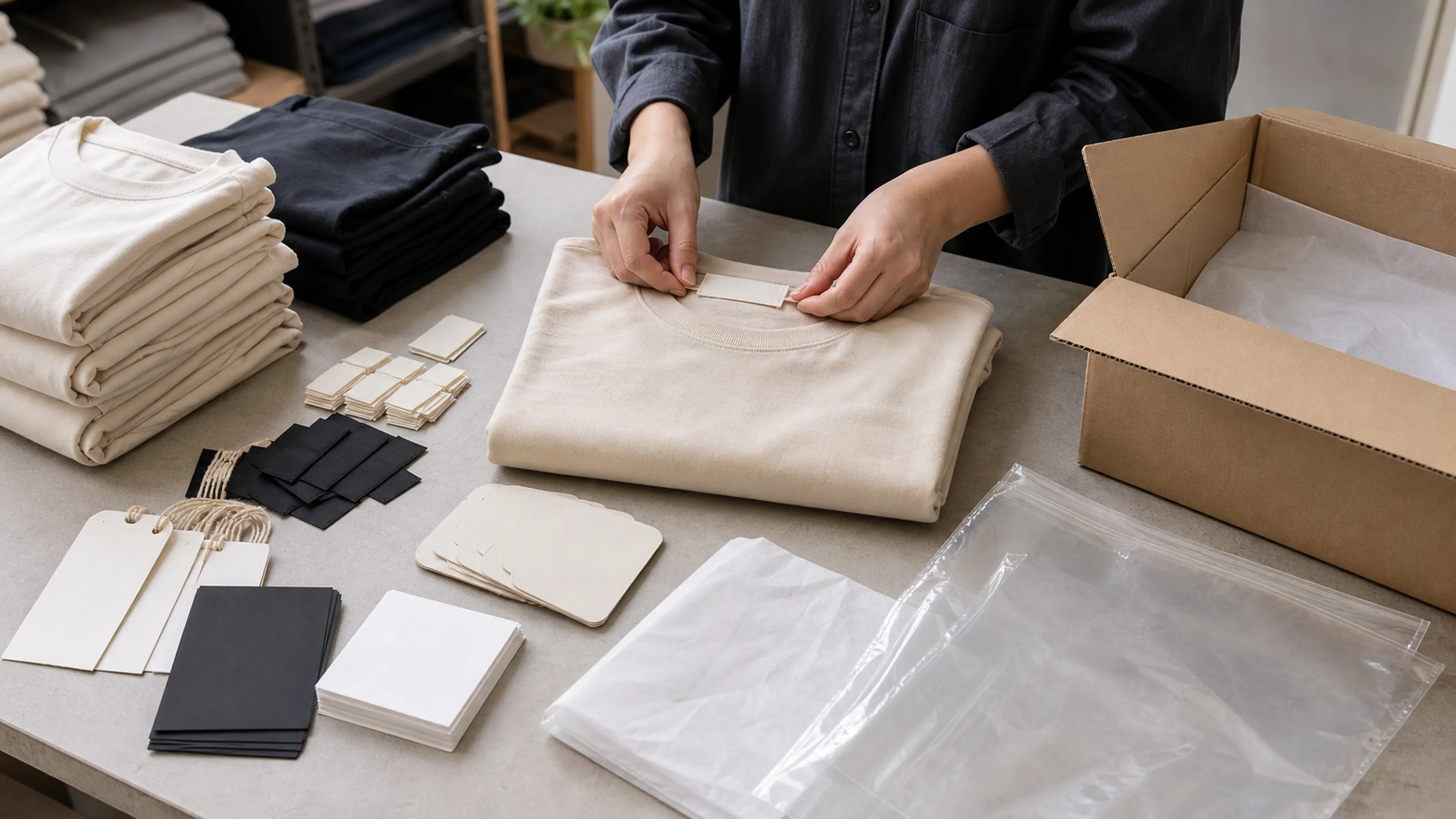
Connect apparel labels, hangtags, folding and custom packaging to the approved garment, SKU data and delivery plan.
Apparel labels and packaging turn an approved garment into a controlled wholesale or retail-ready unit. The working scope can include brand and size labels, care information, hangtags, barcode or SKU stickers, folding method, inner bags, assortment, cartons and shipping marks.
Good custom clothing packaging is operational as well as visual. Every component should connect to colour, size, order quantity and destination data so the right garment receives the right identifier. DRIOV reviews component artwork, material, placement, packing ratios and carton instructions before bulk packing begins.
Where it fits
Record each item before sampling so artwork, product data, quantities and approval responsibility stay connected.
Component name and intended use
Artwork or file revision and approval state
Dimensions, material, colour and attachment or fold
Wording owner, destination market and compliance review
Colour, size, SKU and barcode mapping
Component quantity and supplier minimum
Fold, bag or protection and assortment method
Carton quantity, marks, approval reference and open items
Share artwork, materials, dimensions, folds, barcode data, packing method, assortments and destination marks.
Review physical labels, tags and pack presentation for legibility, attachment, protection and brand consistency.
Match approved component quantities and SKU data with the final garment production record.
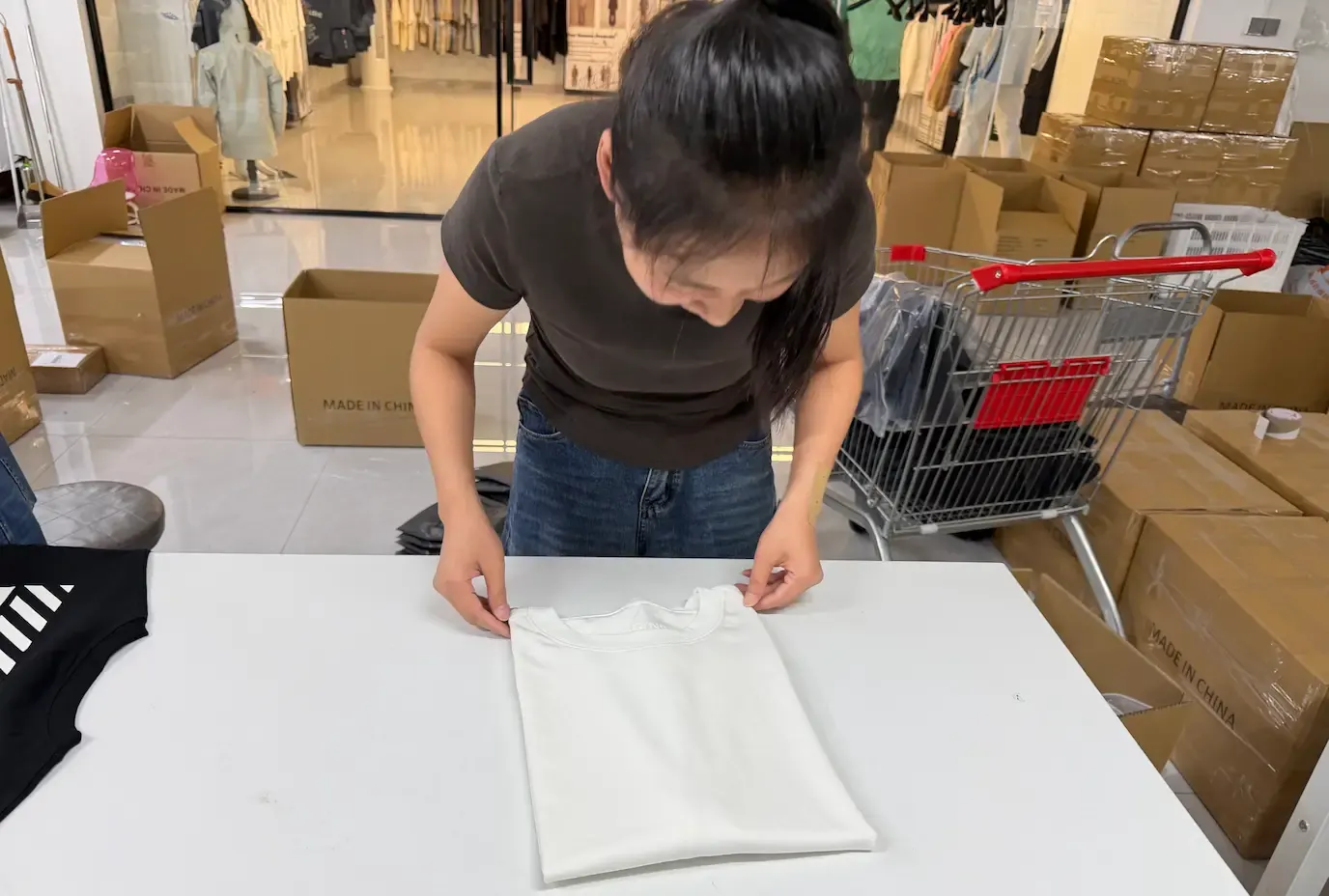
Apply the agreed fold, identification, assortment and carton method, then check counts and exterior marks before shipment.
One continuous sequence connects equipment, process control, physical results and the approval reference.
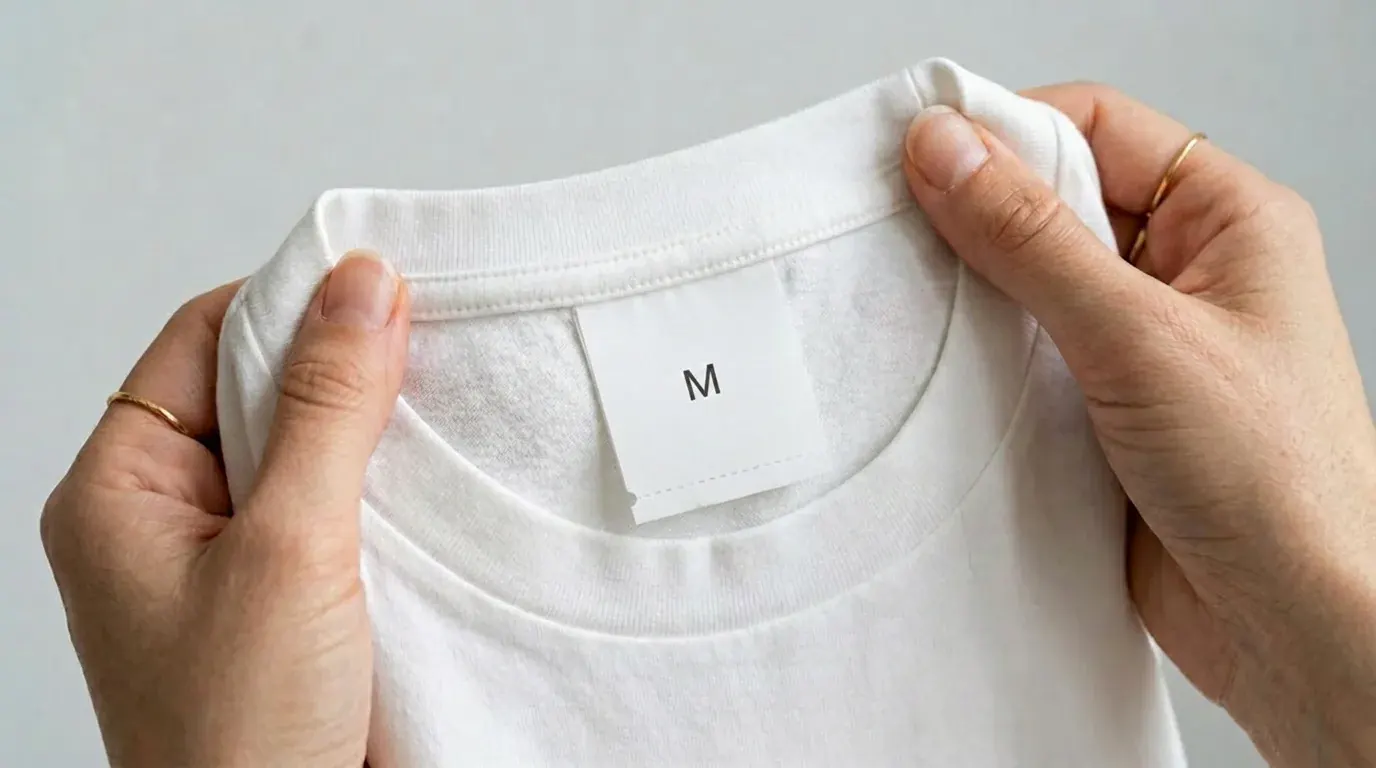

Define each label, tag, sticker, bag and carton mark with artwork version, dimensions, material and quantity.
Read guideMap colours and sizes to barcodes, labels, assortments and carton quantities before components reach the packing line.
Read guideChoose protection and presentation appropriate to the delivery route without adding packaging that has no practical purpose.
Read guideProcurement paths
The method page owns technical decisions. Product and manufacturing pages define the garment foundation, development scope and enquiry route.
Keep labels, hangtags, packing and SKU data tied to the approved garment and repeat-order record.
Review route Developed garment routeConfirm label removal or application, artwork, fold and packing against the selected garment.
Review routeCustom bags, stickers, cards or other components may be reviewed when specifications and supplier minimums are practical. Share material, dimensions, artwork and intended delivery route before a quote.
Before label or sticker production and before the packing plan is approved. Late data changes can affect multiple sizes, colours, components and carton records.
Mixed-size assortments can be reviewed when the assortment, quantities, identification and carton method are clearly defined. Mixed packs require stronger reconciliation than one-size cartons to prevent allocation errors.
No. Labels and packaging are component-level services. Private-label clothing manufacturing covers the complete branded garment programme and links those components to the garment route, sample and repeat-order record.