Fit and pattern
Define rise, waist, seat, thigh, knee, leg opening, inseam and intended silhouette. Review balance and movement on a physical sample.
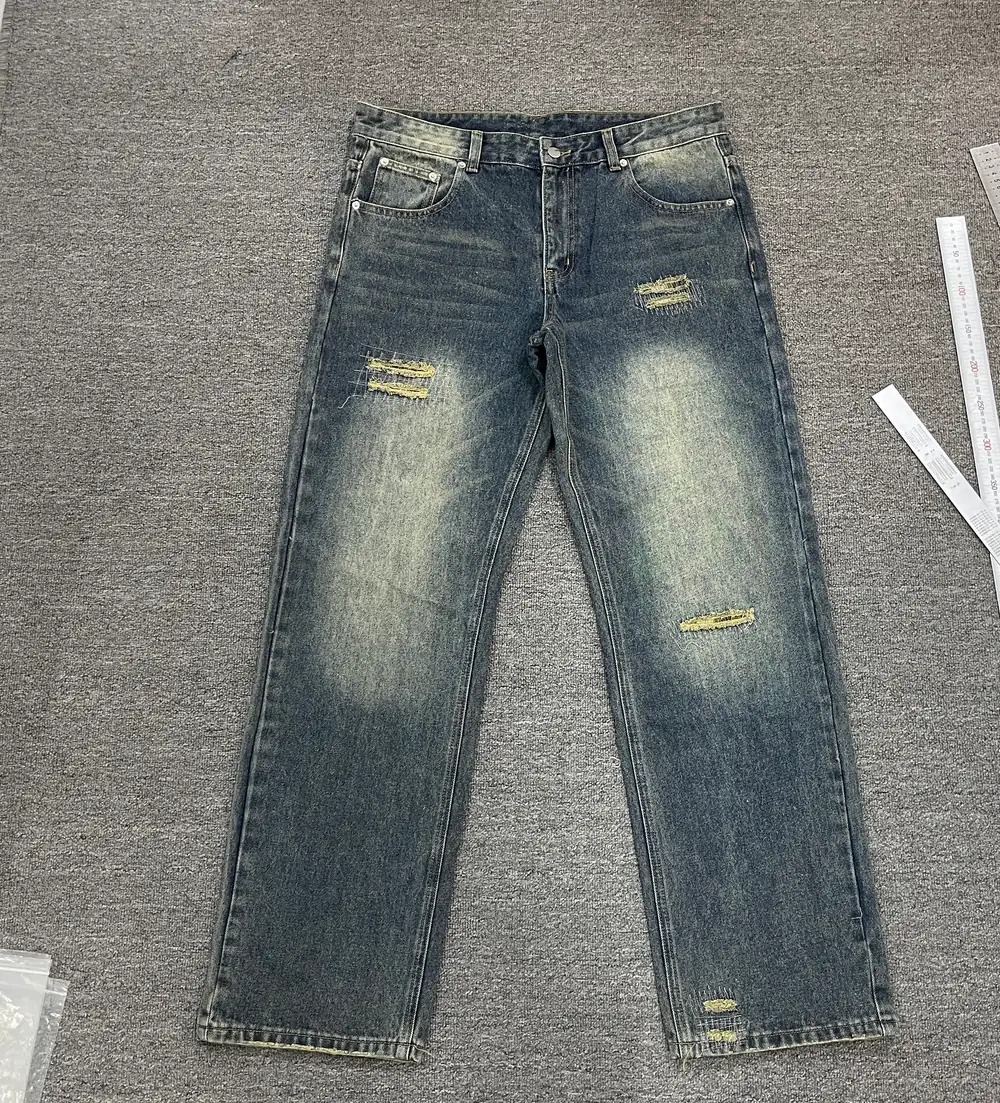
Fit, pattern, denim structure, pockets, seams, thread, hardware and labels establish how the garment is built. Washing then changes shade, surface, hand feel and potentially measurements, so both stages must be approved together.
DRIOV develops the programme against physical samples and records the accepted construction, wash direction and measurement tolerance before bulk production. Reference images can guide the brief but do not replace the approved physical sample.
Full views support silhouette and wash placement decisions; close views support fabric, seam and hardware review.
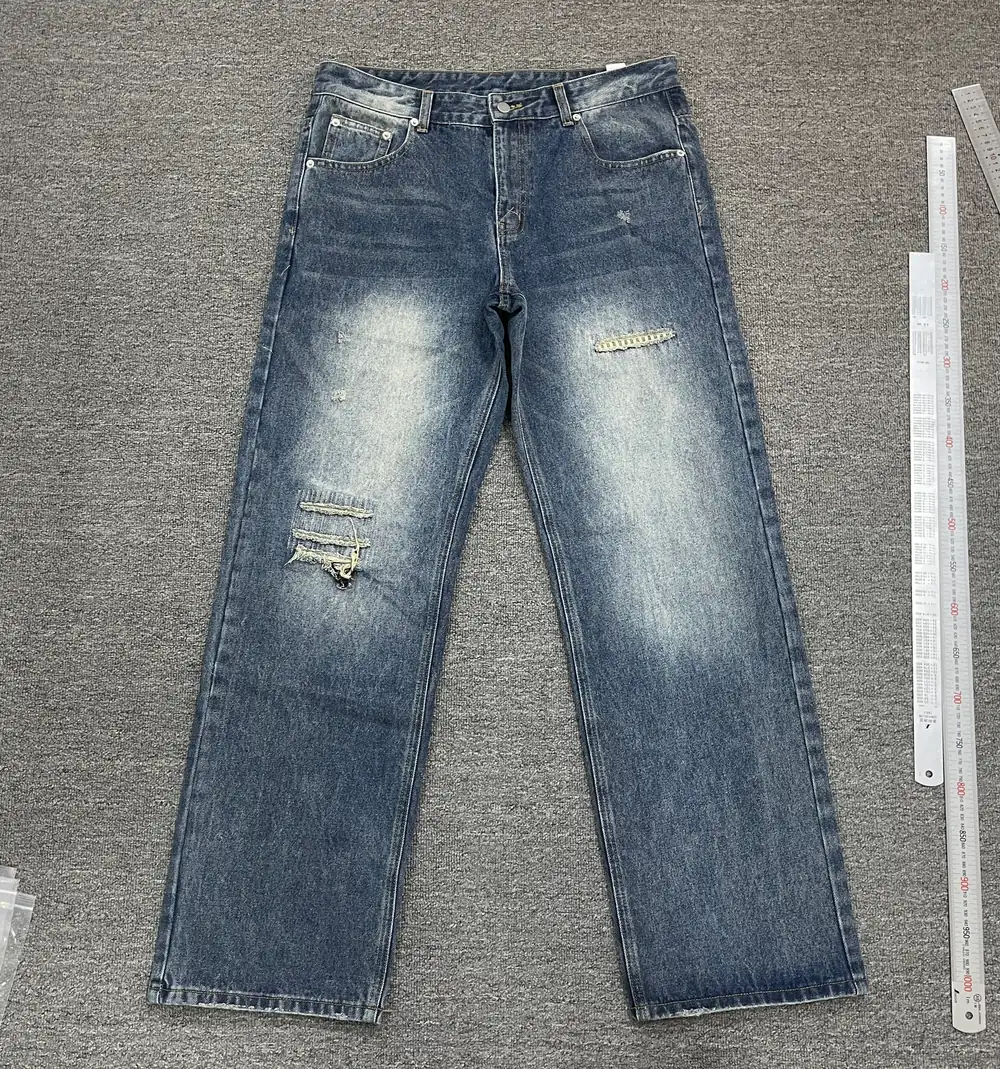
Compare fit balance, thigh and leg measurements, wash placement and shade against the approved reference.
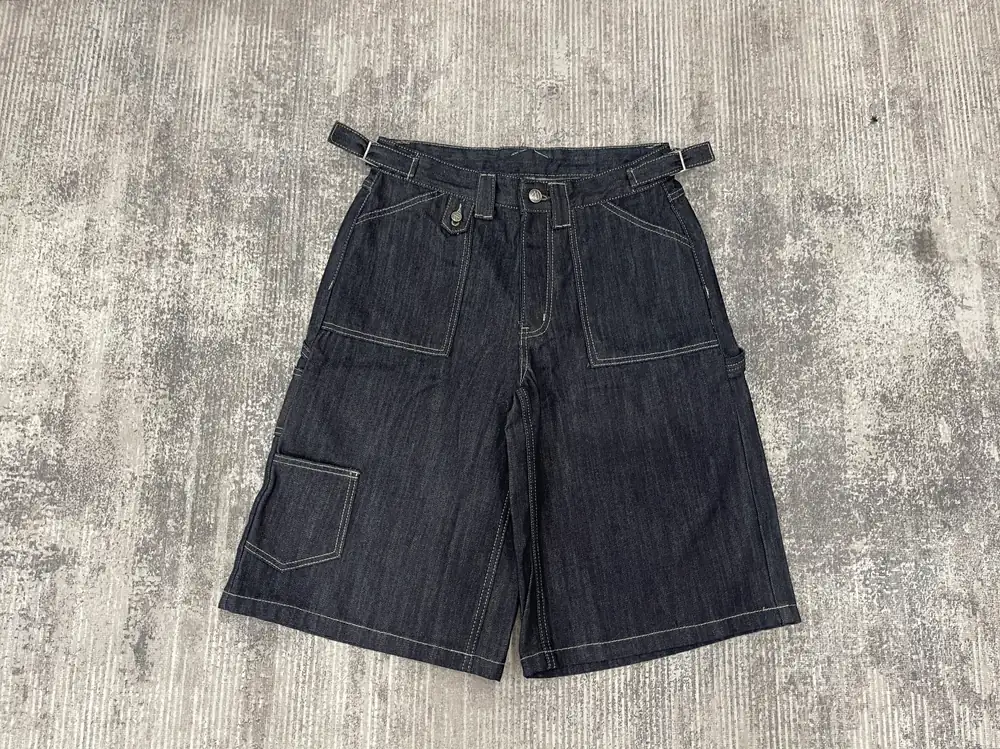
Pocket architecture, topstitching, adjusters and hardware must be documented alongside the base pattern.
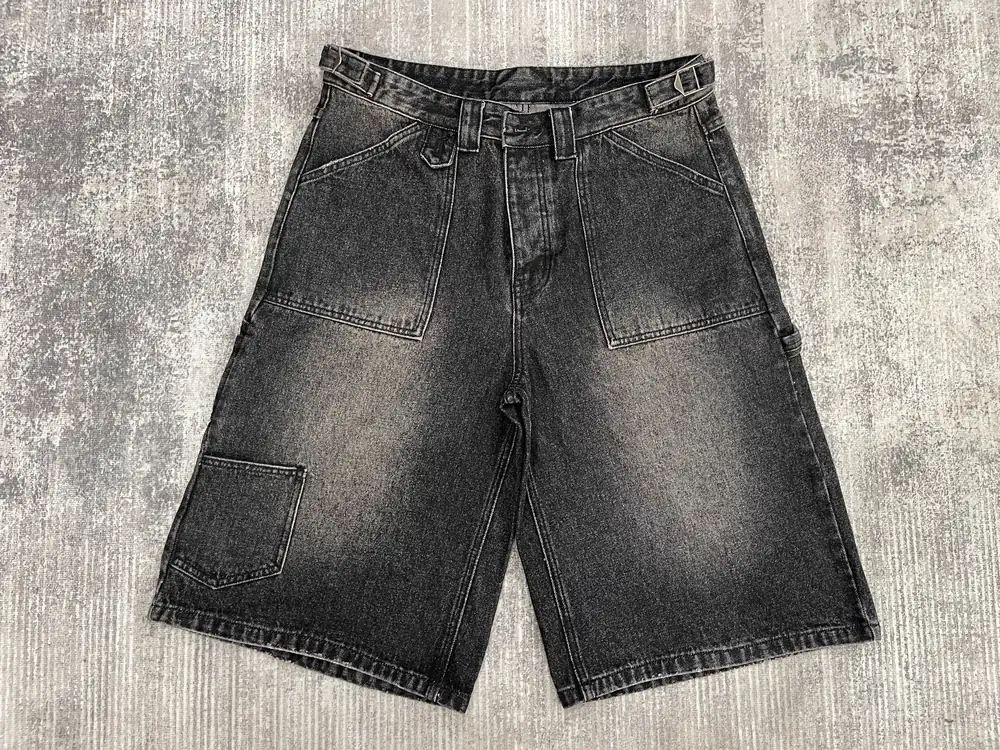
Approve shade, surface, seam response and component compatibility on the complete washed garment.
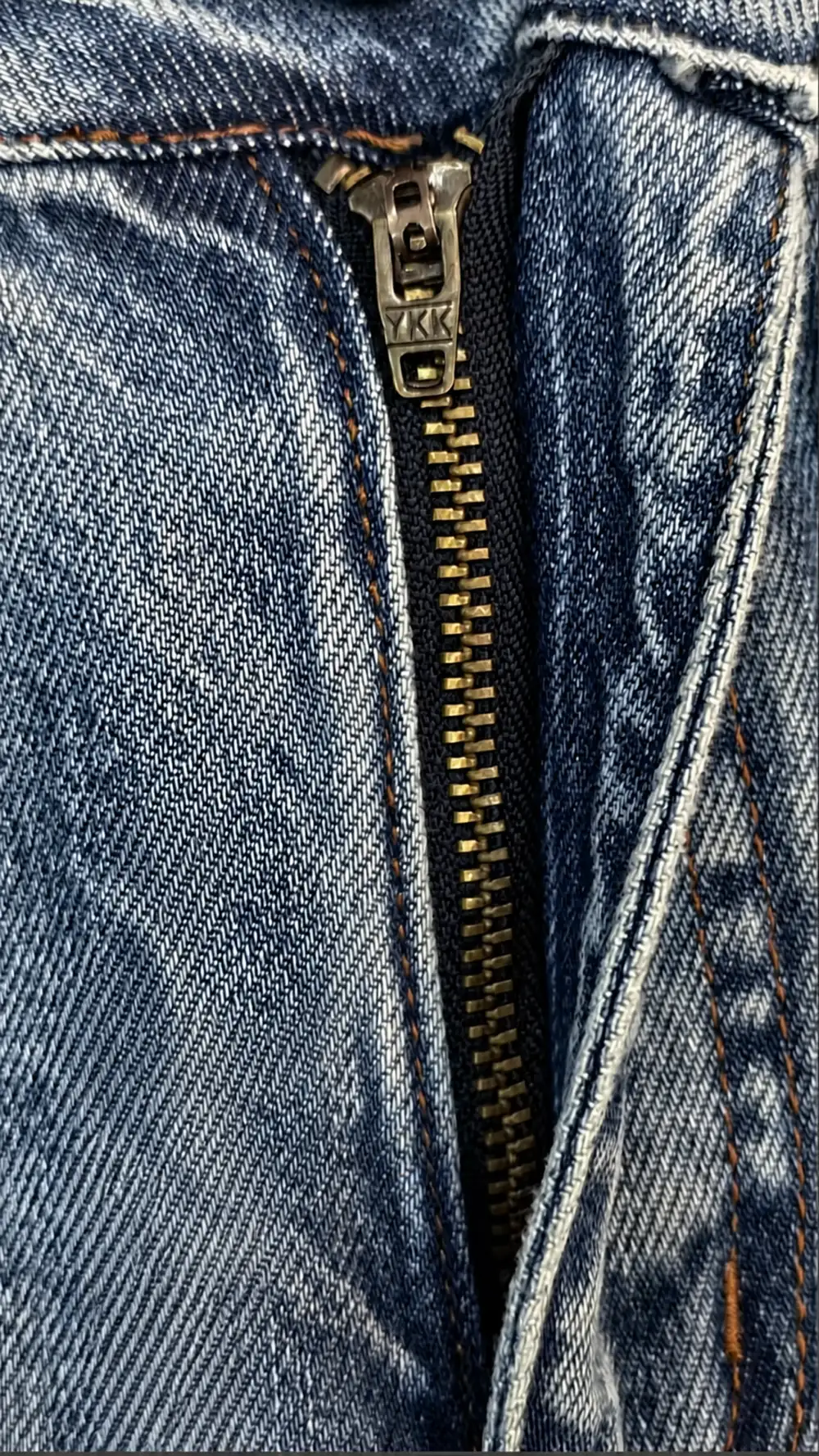
Approve the zipper, fly construction, thread and hardware with the intended denim and wash process.
They should be reviewed as one product system instead of handed to separate suppliers without a shared reference.
Define rise, waist, seat, thigh, knee, leg opening, inseam and intended silhouette. Review balance and movement on a physical sample.
Specify composition, structure, weight direction, stretch requirement, shade and hand feel together rather than using colour alone.
Develop wash, fading, abrasion or distressing against the selected denim and construction, then approve a realistic bulk tolerance.
Document pocket shape, placement, yokes, fly, seam construction, topstitching, bar tacks and reinforcement points.
Confirm buttons, rivets, zipper, thread, labels, patches and other components for appearance, attachment and wash compatibility.
Record pre-wash and post-wash measurements, fit comments and accepted tolerances before bulk release.
Organize reference garments or drawings, fit, measurements, denim direction, construction, wash and brand components.
Develop rise, balance, leg shape, pockets, yoke, fly and construction around the intended silhouette.
Assemble the garment with representative denim, thread, hardware and trims for fit and construction review.
Develop the selected finish, then compare shade, surface, hand feel and construction response with the reference.
Record post-wash measurements and fit comments; resolve revisions before production approval.
Inspect construction, measurements, wash range, hardware, labels and packing against the approved record.
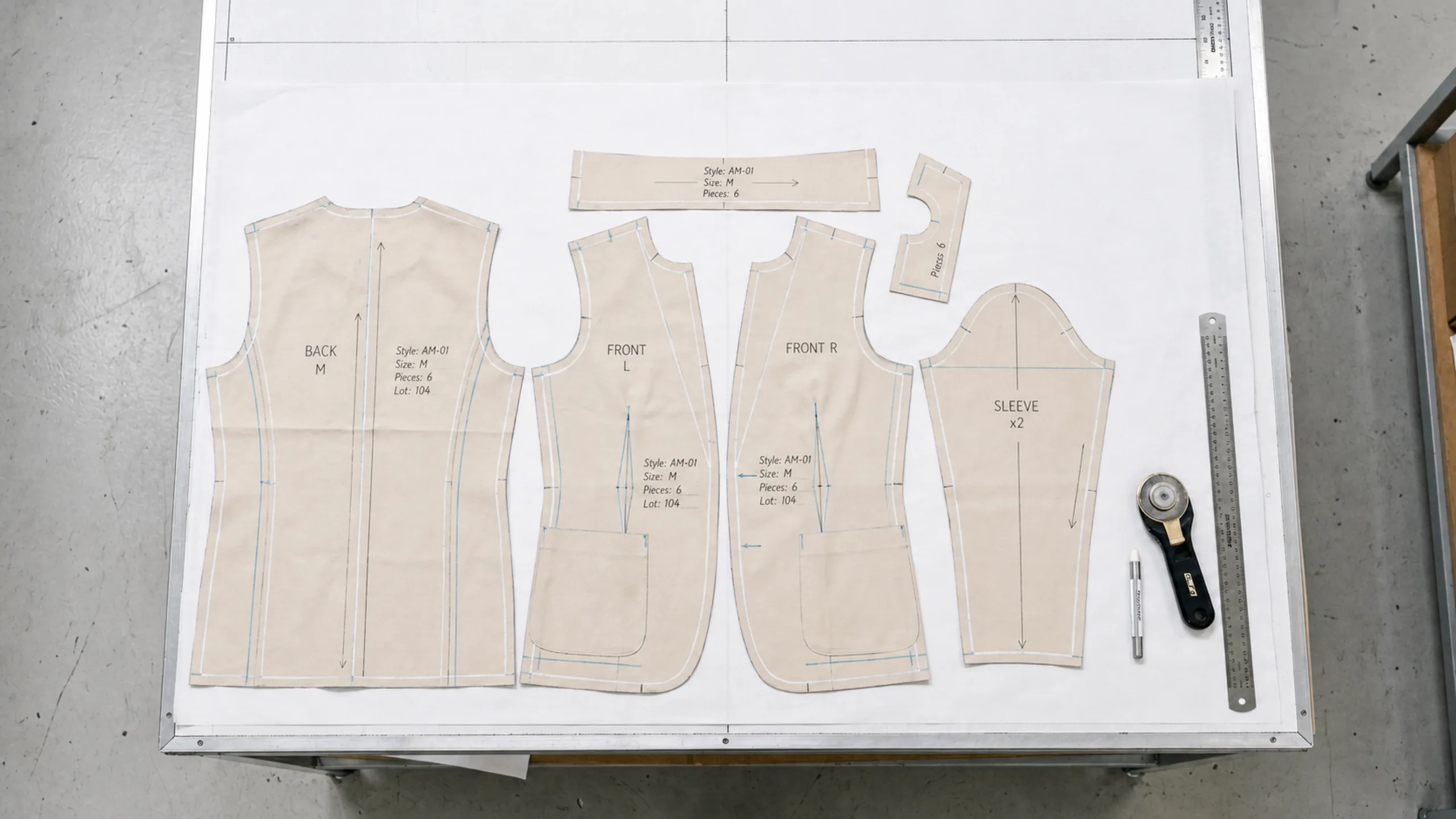
Use the full custom page for the wider sourcing, pattern, sampling, cut-and-sew and quality process; use this page for denim-specific decisions and evidence.
Review full custom manufacturingA reference garment, sketch or tech pack can establish the starting direction. Measurements, fit balance, denim, construction, hardware, wash and tolerances still need to be reviewed and approved on physical samples.
A photograph can describe direction but cannot define fabric chemistry, shade, abrasion, hand feel or variation. The physical wash sample and an agreed tolerance should become the production reference.
Fabric and wash commitments, pattern development, colours, sizes, hardware, trims, construction and production planning all affect the practical quantity. DRIOV reviews MOQ from the actual jeans programme rather than publishing one universal number.
Confirm the approved garment, measurements before and after wash, fit, seam and pocket construction, hardware, labels, wash appearance, shade tolerance, workmanship and packing instructions.