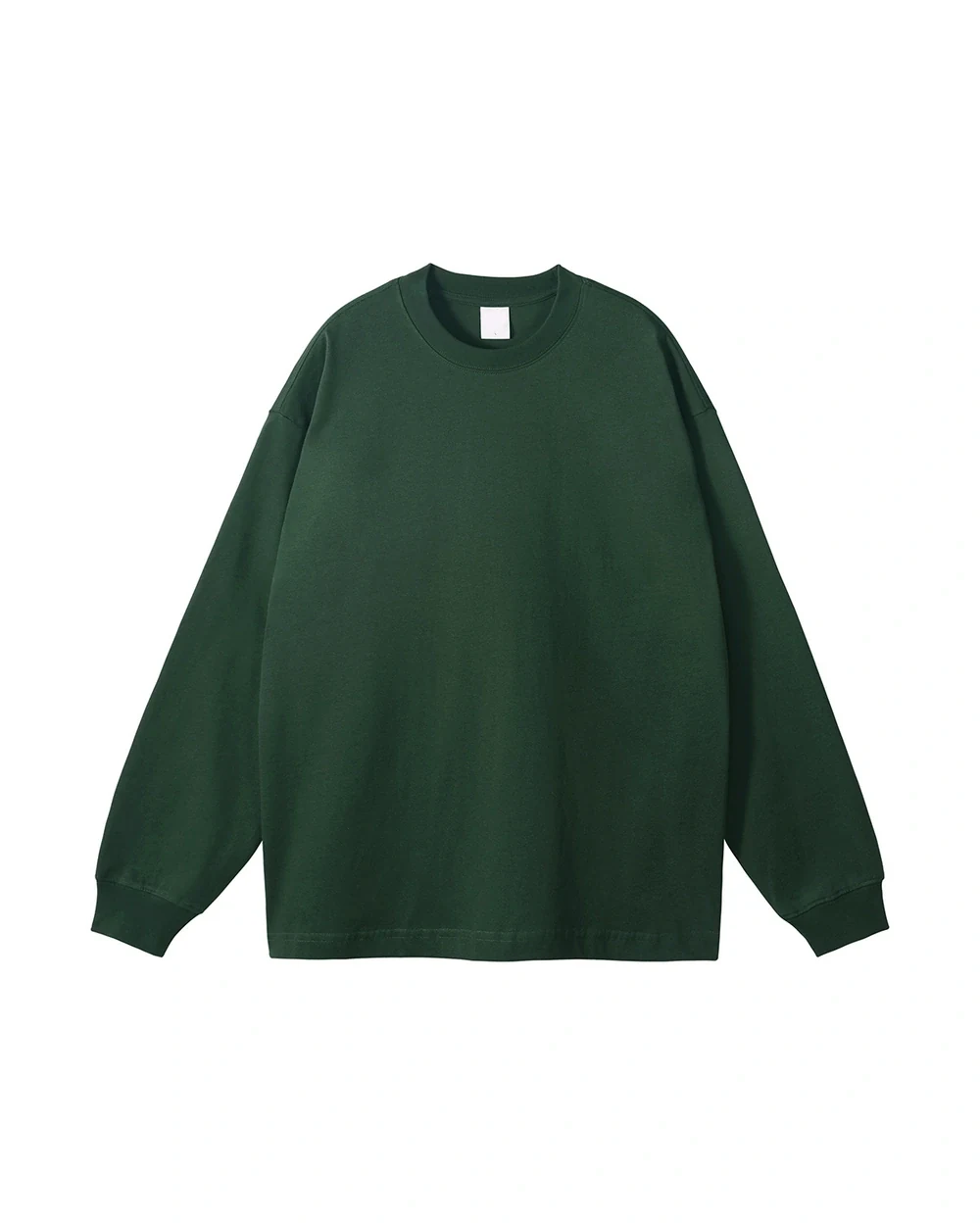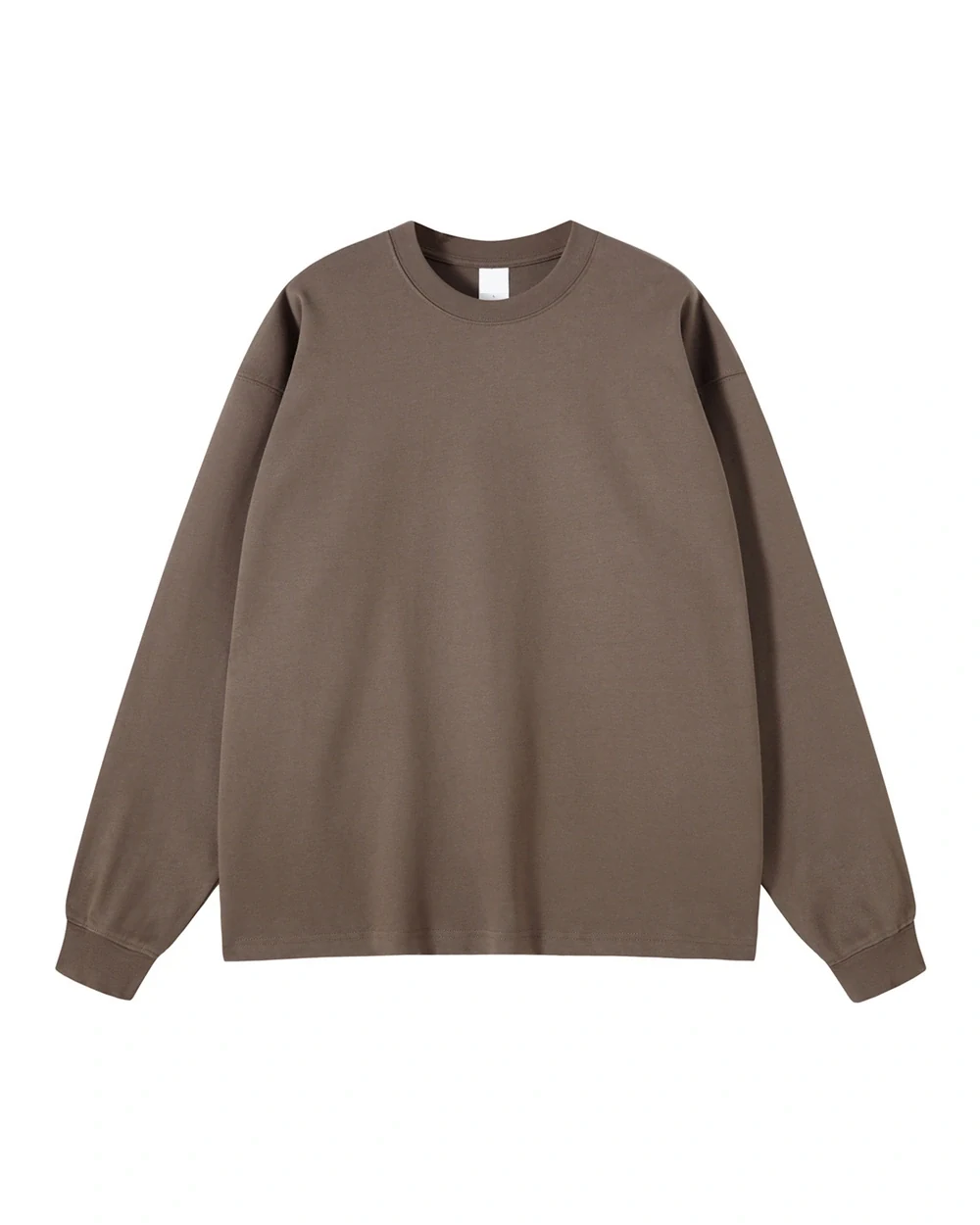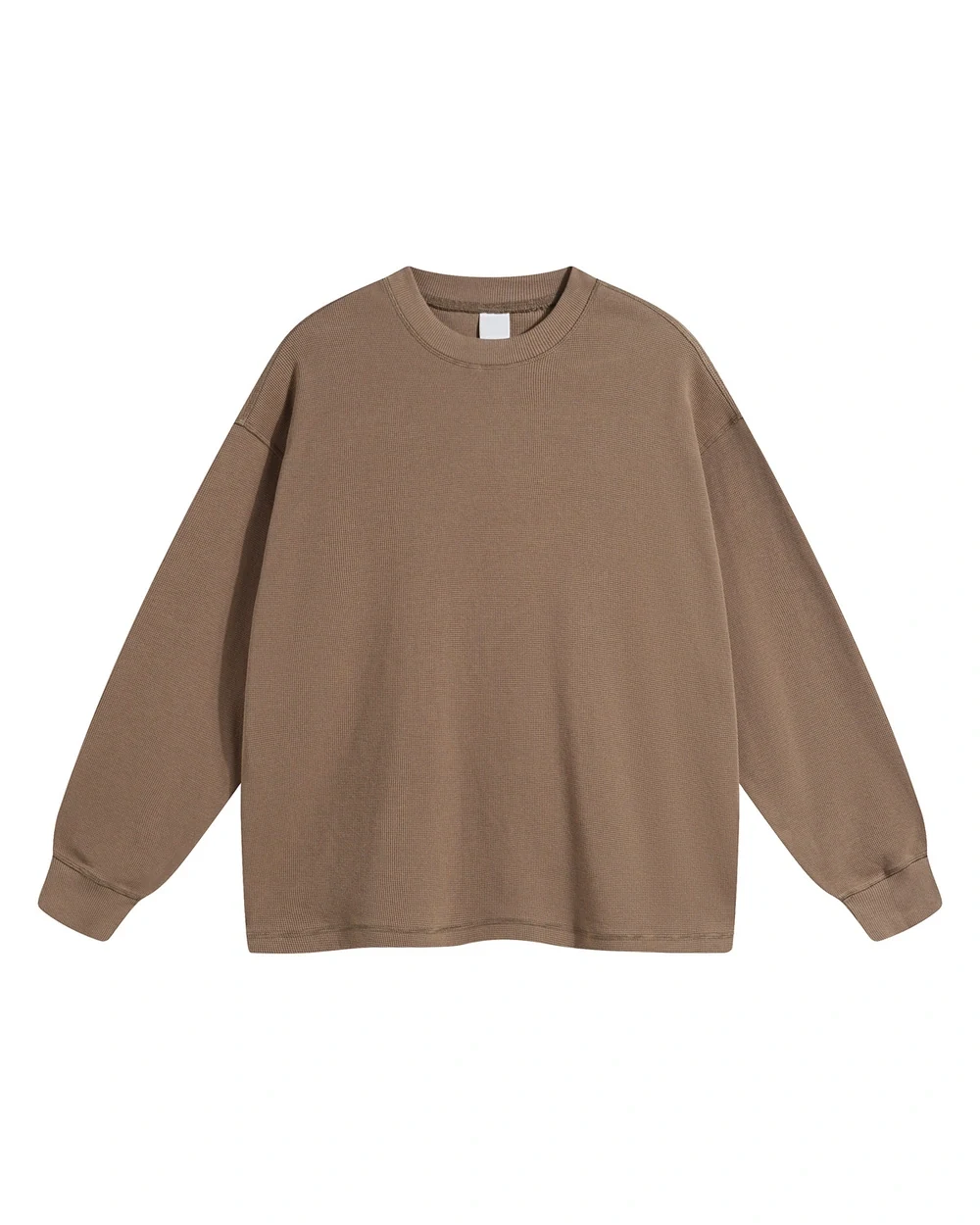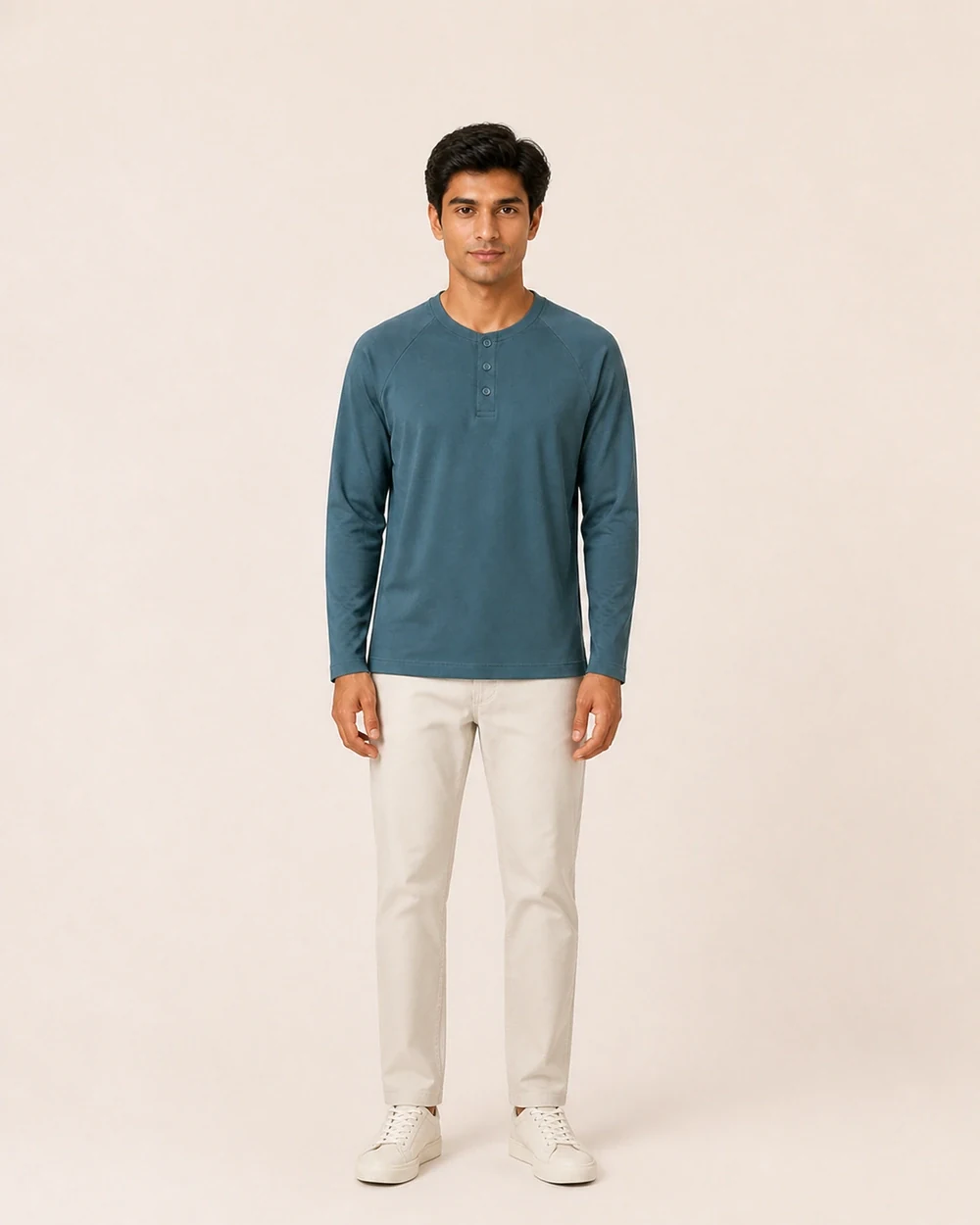
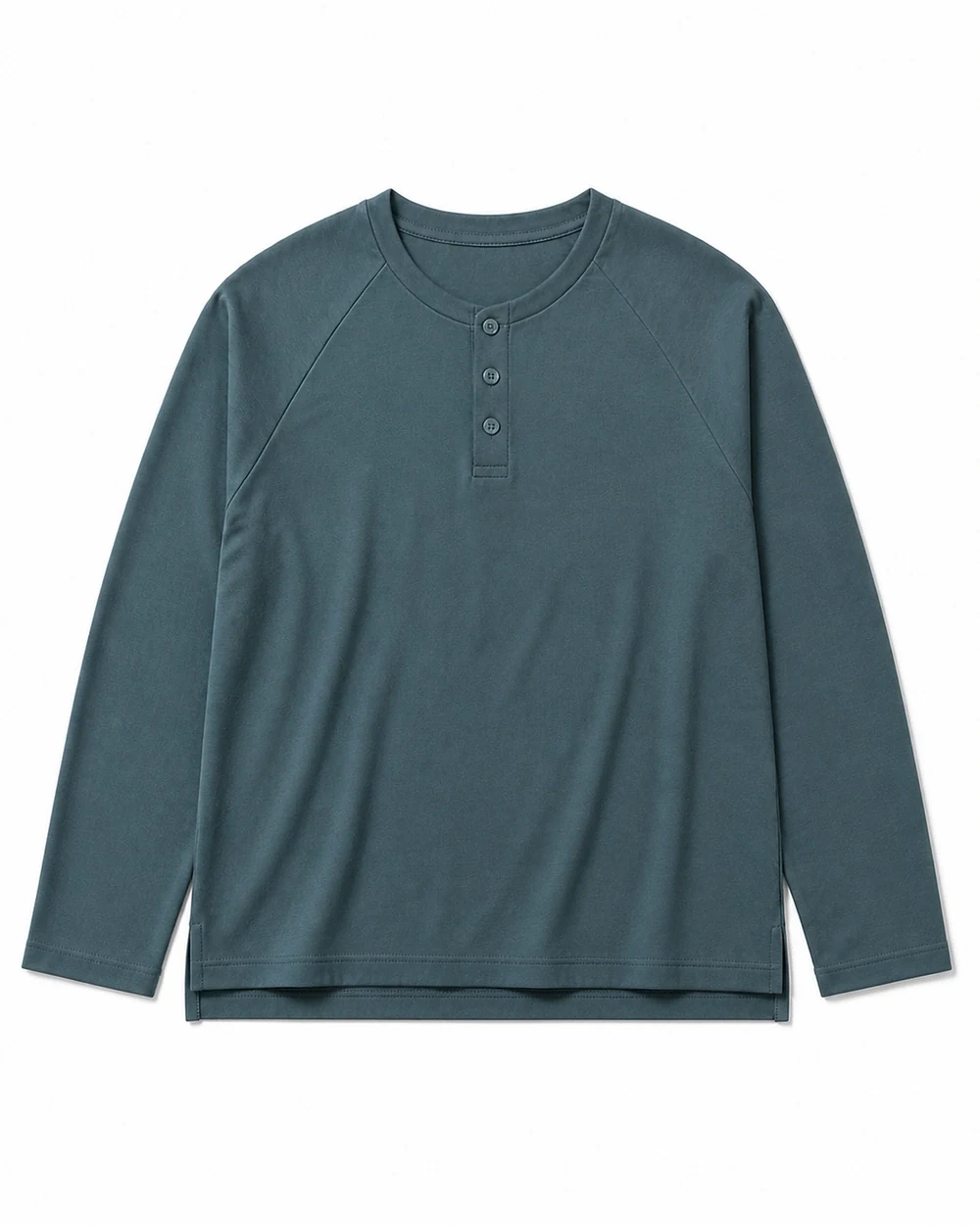
Muted TealWashed BurgundyCharcoalEcru
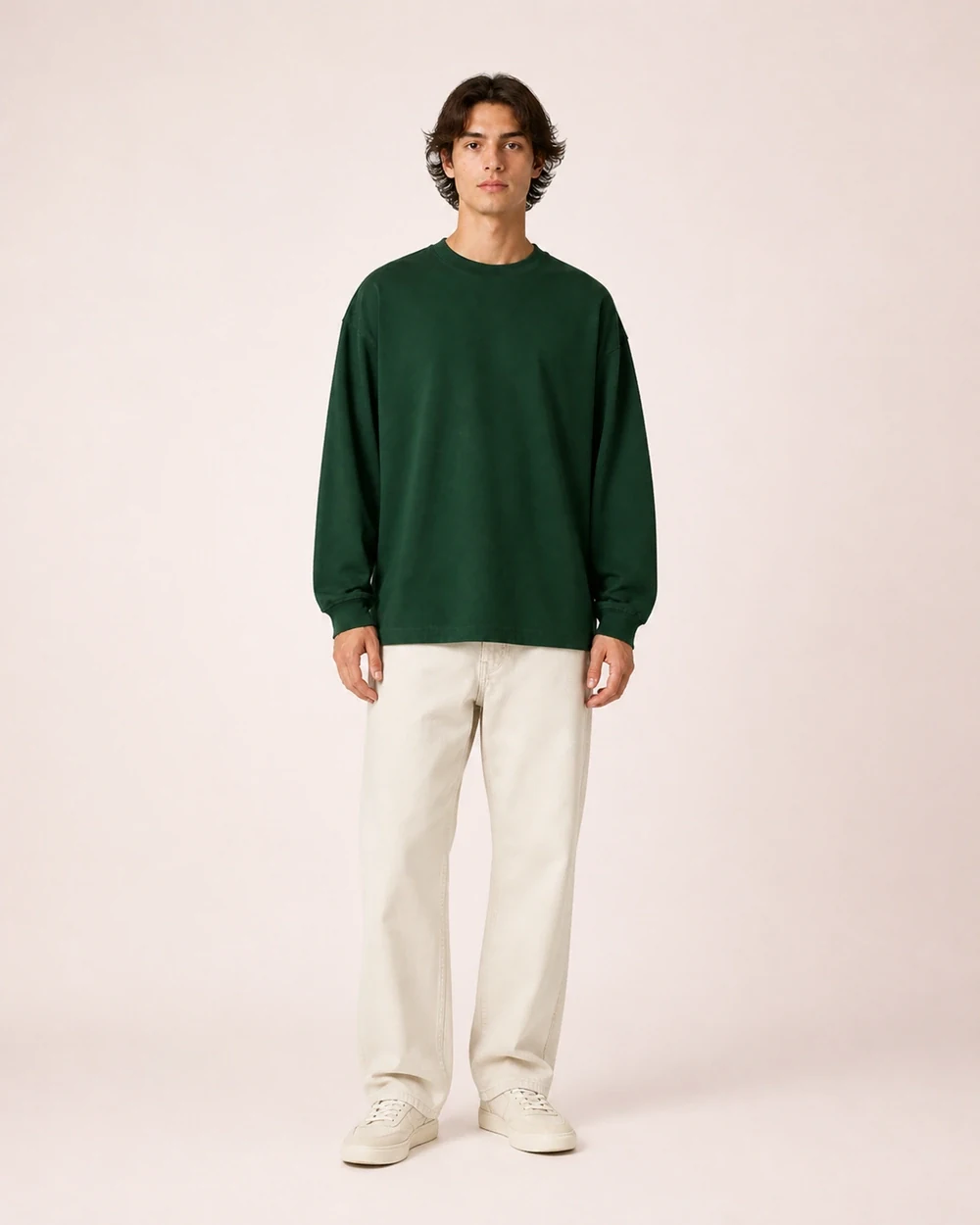
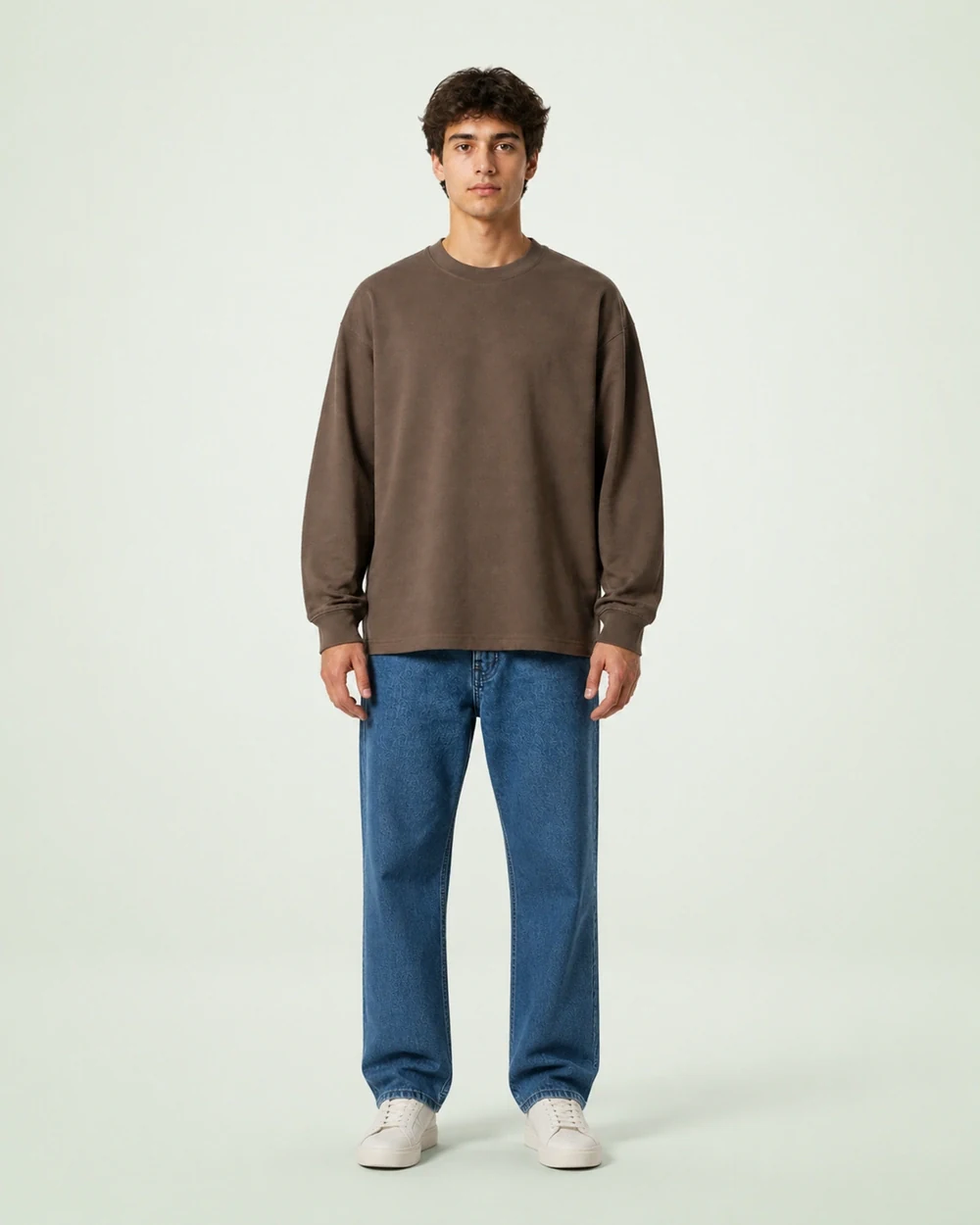
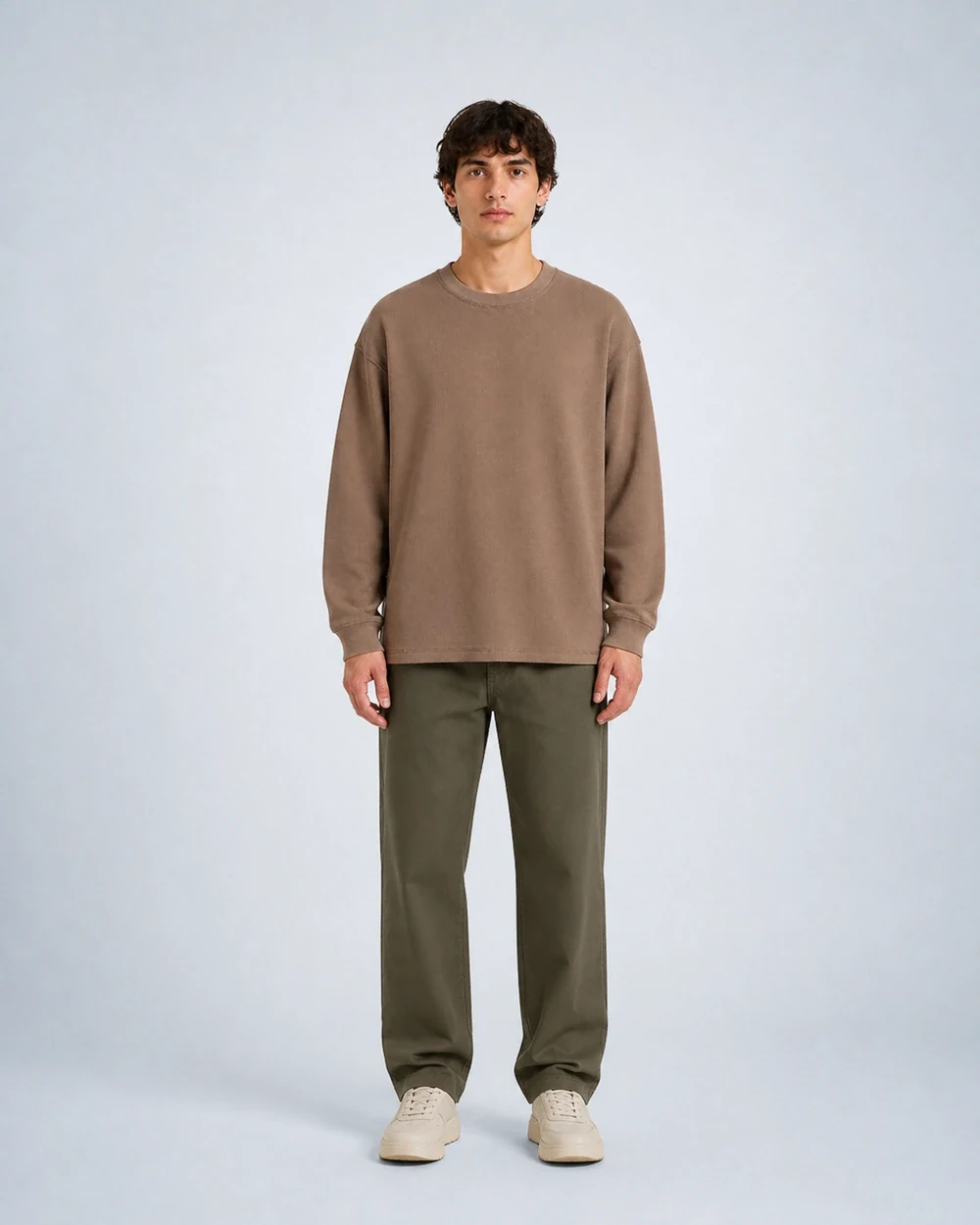
Long sleeve T-shirts sit between a basic tee and a sweatshirt. Sleeve shape, cuff construction and jersey recovery affect how the garment layers, while the available print area extends beyond the chest to sleeves and back panels.
Choose an open hem or rib cuff according to the intended look and use. Check sleeve length, bicep width and cuff recovery so the garment remains comfortable over the full size range.
A long-sleeve cotton jersey should be evaluated for opacity, drape and dimensional stability. The right weight depends on whether it is worn alone, layered or used for uniforms and repeated washing.
Sleeve prints need placement measurements and artwork orientation. Seams, cuffs and tapering can limit the printable area, so production artwork should be reviewed on the selected size before bulk.
Add artwork, labels or packaging to a developed garment through Blank Apparel Customization. If fit, pattern, material or construction must be original, continue with Full Custom Clothing Manufacturing.
Rib cuffs give a more contained sleeve and can support layering, while an open hem creates a cleaner tee-like finish. The choice should match the fit, jersey weight and brand direction.
Yes when the print method, sleeve taper and seam position allow it. Share the artwork at intended size so placement and production tolerances can be reviewed before sampling.
Check body fit, sleeve pitch and length, cuff recovery, neckline, shrinkage, decoration position and size grading. Any measurement that must not change should be identified in the approval comments.
They can be, provided fabric durability, colour, decoration and wash expectations suit the programme. Uniform use may require different testing and repeat-order planning from fashion merchandise.