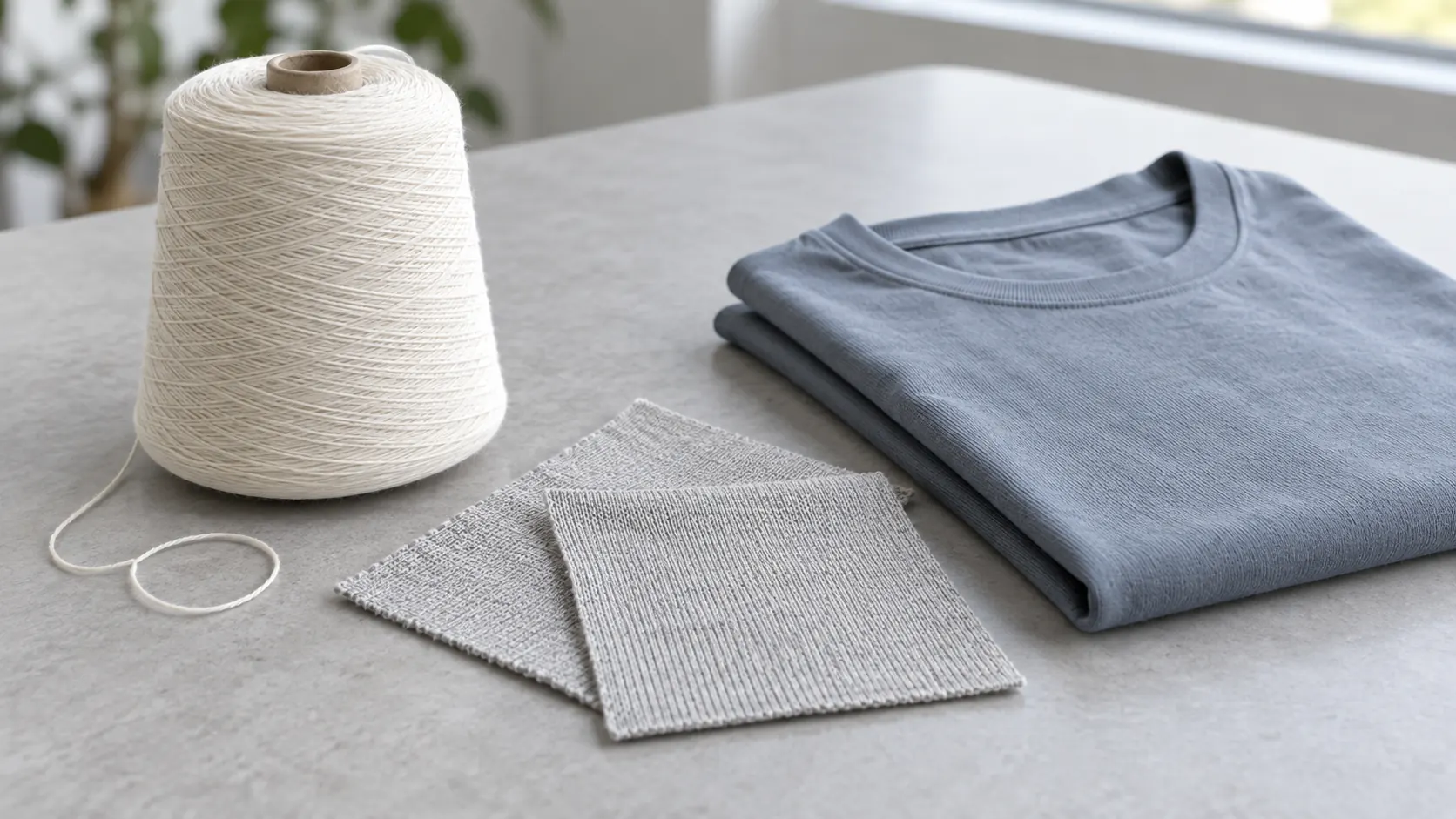
Understand combed and carded cotton, separate yarn preparation from spinning and GSM, and compare T-shirt samples with a practical sourcing checklist.
Combed cotton receives an additional preparation stage that removes shorter fibres before spinning. Carded cotton normally describes cotton prepared without that extra combing stage. Both go through carding. For T-shirt buyers, this distinction is one part of the material specification: neither term alone tells you the fabric’s weight, the garment’s fit or its performance after washing.
Start with the intended T-shirt, request the yarn and fabric details separately, and compare identifiable samples. That gives you a clearer basis for approval than choosing between two material names.
What carding and combing mean
Carding separates and aligns cotton fibres, removes further dust and unwanted material, and forms them into a continuous strand called a sliver. It is part of the preparation process for both carded and combed cotton yarn. Carded cotton has not skipped cleaning.
Combing is an additional stage that removes shorter fibres. It can support finer yarn counts and influence the resulting fabric’s feel. Whether it is needed depends on the yarn specification and intended product. Ask what the proposed preparation contributes to your T-shirt brief rather than treating it as a complete quality grade.
Keep four specification dimensions separate
A description such as “combed ring-spun cotton jersey” contains several pieces of information. Each answers a different question.
| Specification dimension | What to request | What it does not establish |
|---|---|---|
| Fibre preparation | Carded or combed, confirmed for the proposed yarn | The spinning system or finished garment performance |
| Spinning system | Ring-spun, rotor/open-end or another identified system | Whether an additional combing stage was used |
| Knit construction | The exact construction, such as single jersey | Fibre composition, finished weight or a quality grade |
| Finished fabric weight | GSM, its specified condition and any agreed tolerance | Yarn preparation, yarn count or the garment's complete feel |
Composition belongs alongside these fields: state the fibre percentages explicitly. If the body, neck rib or other components differ, identify them separately.
Ring spinning can use either carded or combed preparation. “Combed ring-spun” and “carded ring-spun” are therefore meaningful descriptions. Do not translate a vague phrase such as “regular cotton” into a specific spinning method without confirmation.
This distinction also improves quote comparisons. A carded option and a combed option might differ in construction, weight or finish as well. Keep those differences visible before attributing the entire price or sample difference to combing.
Yarn count is not GSM
Yarn count expresses the yarn’s linear density. GSM expresses fabric mass per unit area. Record both when the supplier provides them; one should not replace the other in a specification.
Ask for the numbering system and ply information with the count. A bare number such as “30” leaves room for misunderstanding. Avoid choosing a target yarn count solely because its number sounds higher, and do not convert a count directly into a promised finished GSM.
The fabric GSM guide explains how to use finished weight in a sourcing brief. Keep the weight target connected to a physical sample and the intended garment.
Compare samples for the decision you are making
First decide whether you are evaluating a proposed material or trying to understand the effect of one variable. Two T-shirts in different colours, weights, fits and finishes may help you express a preference, but they do not isolate the effect of fibre preparation.
For a more useful comparison, request similar composition, spinning system, yarn count, knit construction, finished weight, colour and finish where practical. Record any differences that remain. Use the same viewing conditions and compare the same areas of each garment.
A simple review record separates supplier information from your own observations:
| Review field | Supplier information | Your observation or decision |
|---|---|---|
| Identity | Sample code, specification revision and date | Which physical sample was reviewed |
| Material | Composition, preparation, spinning, count, construction and GSM | Any missing or conflicting information |
| Surface | Stated finish and intended fabric face | Visible texture, fuzz and surface evenness |
| Handle and appearance | Reference sample or agreed target | Preferred softness, body, drape and opacity |
| Garment | Sample size, measurements and construction | How the material works in the intended fit |
| Next step | Available follow-up sample or evidence | Approve a defined feature, request a change or leave it open |
Write observations precisely. “Sample B feels smoother against the skin” records a preference. “All combed cotton is smoother” makes a broader claim that the comparison cannot establish. A photograph can identify the sample and document visible features, but it cannot confirm yarn preparation or replace a physical review of hand feel.
Does combed cotton prevent shrinkage or pilling?
No. Combing is not a guarantee against either issue.
Shrinkage depends on more than fibre preparation, including fabric construction, processing, finishing and care. Pilling also has multiple influences, including the fibres, yarn, fabric construction, finish and intended use. A label saying “combed” does not supply a shrinkage result or a pilling rating.
If these properties matter to the order, agree on the evidence required for the actual material or garment. Identify the sample, method, conditions and acceptance criteria before comparing results. Keep informal observations separate from laboratory results, and do not turn one successful care trial into an unrestricted durability promise.
For decorated T-shirts, review the intended artwork on the proposed fabric. Record the finished print or embroidery size and placement with the sample so approval refers to the combination you plan to order.
Put the choice into an RFQ
Give each proposed material its own reference, then ask the supplier to confirm the complete specification. This example request can accompany your garment brief:
Please identify each proposed fabric with a separate sample code and confirm its composition, fibre preparation, spinning system, yarn count and numbering system, knit construction, finished GSM and finish. Mark information that is still to be confirmed. Explain any differences between the quoted fabric and the submitted sample.
Before requesting a quote, include:
- The intended fit, sample size and garment measurements.
- A colour reference and the features to retain from any reference garment.
- Artwork dimensions, placement and proposed decoration method.
- Order quantities by size and colour.
- Care expectations and the evidence required before approval.
- The selected sample code and specification revision, with unresolved choices marked clearly.
Use the tech pack guide to keep these decisions with the garment specification. Before approval, make sure the sample code and revision match the quotation and material record.
Browse the blank T-shirts for published product details, then request a quote with your fabric direction, quantity breakdown and unresolved sample questions.