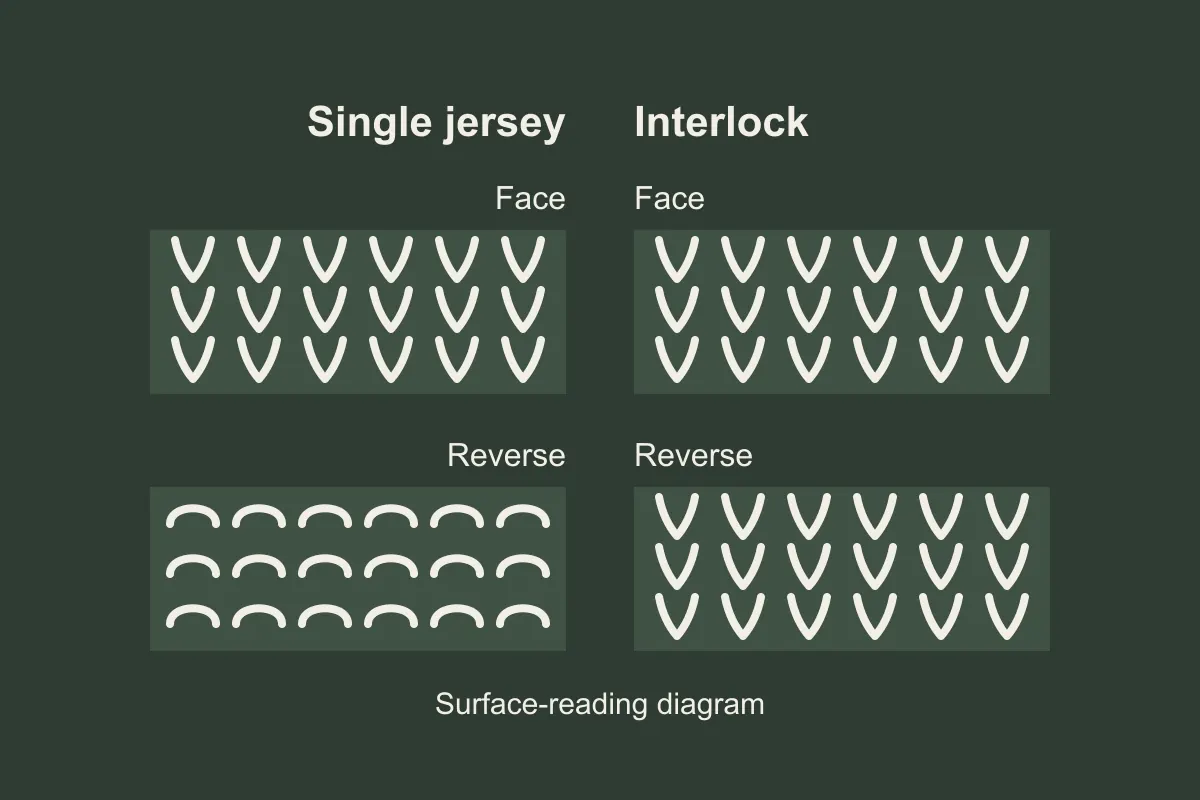
Compare single jersey and interlock by fabric structure, face and reverse, edge behaviour and garment samples, with a practical T-shirt sourcing record.
Single jersey has visibly different technical faces and backs. Interlock is a double-knit construction with a similar knit-face appearance on both sides. For a T-shirt buyer, that structural difference helps explain what to inspect, but it does not settle the choice by itself.
Choose between identified fabric samples, then review the intended garment. Composition, yarn, finished weight, colour and finish belong alongside the construction name in the specification.
Read the face and reverse
Single jersey uses the knit stitch throughout its basic structure. On the technical face, the loop legs form vertical columns with a V-shaped appearance. On the reverse, the loop crowns create a more horizontal appearance.
Interlock combines two interlocking 1 × 1 rib structures during knitting. It is one integrated fabric, rather than two finished fabrics sewn together. Its two surfaces have a similar appearance.
Turn each swatch over and mark the supplier-confirmed outer face. An interlock sample can still have a specified garment face because colour, printing or finishing may distinguish its sides. Keep that instruction with the sample instead of relying on memory.
Inspect the raw edge
A raw single-jersey edge tends to curl. Interlock is generally more balanced at the cut edge and less prone to that curling.
Inspect the supplied swatches after they have rested without being held flat. Record the edge direction and visible behaviour rather than forcing them into an identical shape for a photograph. Ask how the actual material will be handled during cutting and sewing.
Edge curl is a handling observation. It does not establish a shrinkage rate or tell you how the completed hem will behave after care. Finishing and garment construction need their own review.
Keep conditions comparable
If you want to compare the constructions, request similar fibre composition, yarn specification, finished GSM, colour and finish where practical. Record any differences that remain.
For example, a heavier interlock sample and a lighter, softened single jersey may show two useful garment directions. They do not isolate the effect of construction. Decide whether you prefer the complete material or need a closer comparison before choosing.
Use the fabric GSM guide for weight terminology. Keep the recorded weight separate from your observations of thickness, drape and surface.
Ask which condition the specification describes: a proposed material, a finished fabric sample or the fabric used in the submitted garment. If those references differ, identify the difference before approving one against another.
Record both samples
Use separate sample codes and leave unconfirmed information open. The blank fields below are a record to complete, not example specifications.
| Record field | Sample A | Sample B |
|---|---|---|
| Supplier sample code and revision | ______ | ______ |
| Confirmed knit construction | ______ | ______ |
| Composition and yarn details | ______ | ______ |
| Finished GSM and stated condition | ______ | ______ |
| Colour and finish | ______ | ______ |
| Face and reverse observations | ______ | ______ |
| Raw-edge behaviour | ______ | ______ |
| Drape, opacity and hand-feel observations | ______ | ______ |
| Garment or decoration sample reference | ______ | ______ |
| Decision and unresolved questions | ______ | ______ |
Photograph each face with its sample code and orientation visible. Compare the swatches under the same light and against the same background.
Write observations that someone else can act on. “Retain Sample B’s fuller body” identifies a preference. Follow it with the confirmed specification and physical reference needed to retain that result in the garment.
Review seams and fit
A swatch helps you shortlist a material; a complete T-shirt shows how it works with the pattern and construction.
Ask the garment maker to review:
- the intended fabric face and direction for every panel;
- relaxation and handling before cutting;
- edge control and seam construction;
- neckband material and its relationship to the body fabric;
- sleeve, side-seam and hem appearance;
- measurements and fit on the intended sample size.
Review the shoulder, sleeve opening, body and hem while the garment hangs naturally and during a fit check. Record where the fabric needs more body, a different drape or a construction adjustment.
A change from single jersey to interlock should trigger another garment review. Keep the pattern reference and measurements visible so a fabric change does not quietly become an undocumented fit change.
If the project requires fabric, fit or construction development beyond an existing garment, use the custom clothing manufacturing guide to organise that discussion.
Check the decorated surface
Use the intended artwork, finished dimensions and placement on the proposed fabric. Review the decorated area and the surrounding garment together.
For printing, compare coverage, colour, edges, flexibility and the feel of the reverse. For embroidery, inspect the lettering, surrounding fabric, backing and wearer contact. Note any distortion or surface change requiring adjustment.
Keep the decoration sample connected to the fabric code. Approval on one material does not identify the result on another, even when their colour and GSM are similar.
Neither construction name supplies a universal print-quality or embroidery result. The useful approval is the named combination of material, artwork and process.
Agree care approval
If dimensional change, recovery or appearance after washing matters, agree the evidence required for the actual fabric or garment. Identify the sample, care method, conditions and acceptance criteria before reviewing results.
Measure the same named garment points before and after the agreed procedure. Record appearance changes alongside dimensions, including seams, hem, neckline and decoration where relevant.
Do not infer a wash result from the raw edge, a hand-stretch demonstration or the word “interlock.” Construction, yarn, processing, finishing and care all influence the finished result.
Prepare a sourcing brief
Before requesting a quotation, bring together:
- The intended T-shirt fit and the qualities to retain from the selected sample.
- Confirmed construction, composition, yarn details, finished GSM, colour and finish.
- The sample code, garment reference and current specification revision.
- Artwork, decoration dimensions, placement and sample requirements.
- Quantity breakdown by size and colour.
- Care expectations, required evidence and decisions still open.
For an existing garment starting point, browse the blank T-shirts and use the published product details for that specific option. Confirm the proposed material through the quotation and sample record.
Then request a quote with the selected direction and unresolved questions. A clear sample reference gives the discussion more substance than asking for “better jersey” or “premium interlock.”