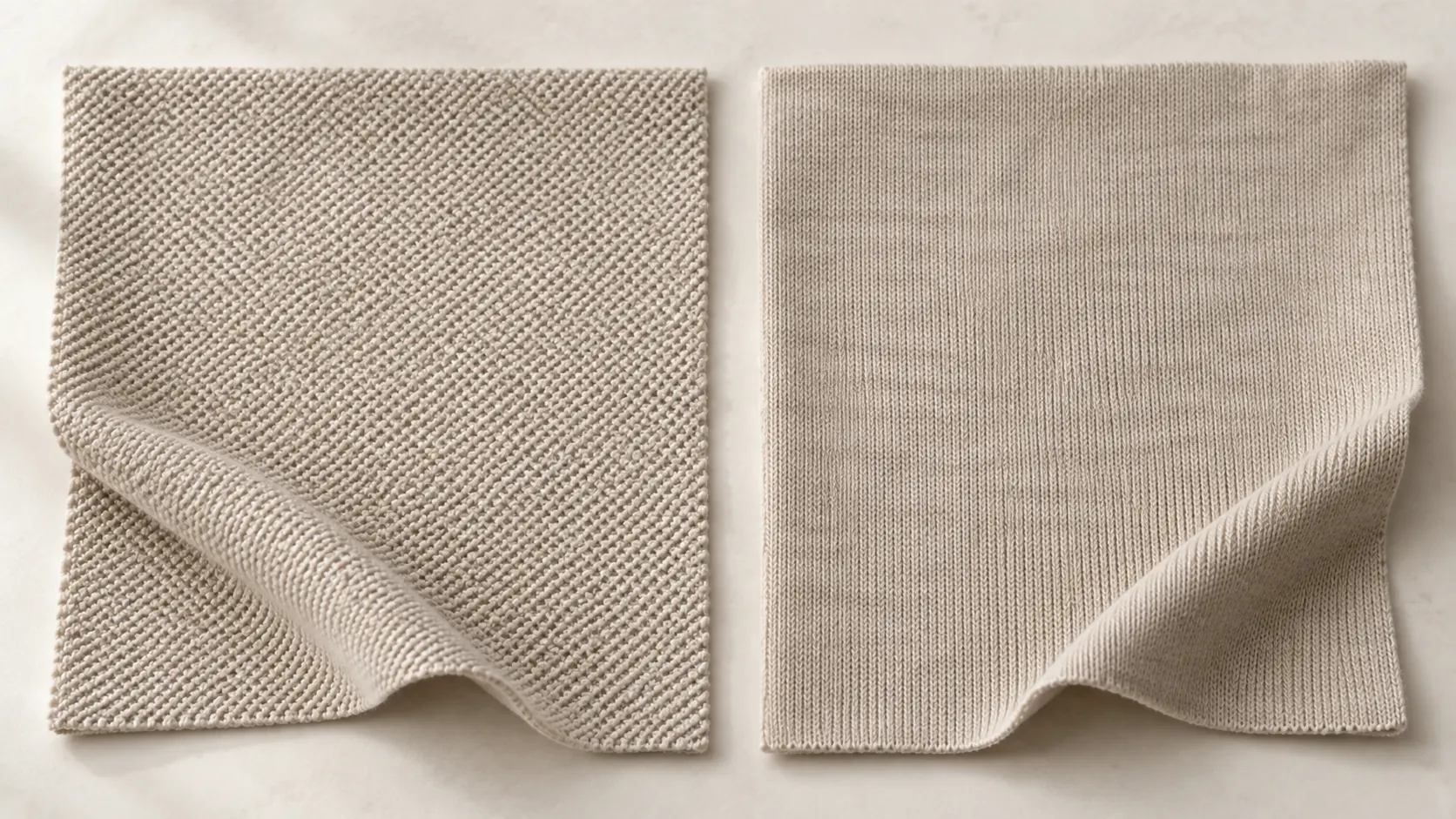
Compare pique and jersey polo fabrics by surface, composition, weight and garment details, with a sample comparison table and a practical sourcing checklist.
The main difference between a pique polo and a single jersey polo is the fabric structure and surface. Pique, also written piqué, has a small patterned texture; single jersey has a smoother face with visible columns of knit stitches. Choose pique when that texture is part of the design brief, or consider jersey for a smoother look. Then assess the actual samples before choosing the fabric.
Neither name specifies fibre content, weight or a quality grade. A useful sourcing brief separates the knit construction from those other details instead of asking for a “premium polo fabric” without a reference.
What pique and jersey mean
Single jersey uses knit stitches throughout. Its technical face and back look different. Single pique combines knit and tuck stitches, creating its characteristic texture. Pique also has other constructions, including double pique and six-feed pique, so the name alone does not identify one exact cloth.
Ask the supplier to identify the construction and intended outer face of each swatch. Keep that identification with the sample; a close-up photograph can record its appearance but cannot replace the fabric specification.
A practical sample comparison table
Use the same questions for both options. Record what is supplied and what you observe in separate columns so a preference does not become an unsupported specification.
| Variable | Information to request | What to review on the sample |
|---|---|---|
| Knit and surface | Exact construction and intended outer face | Texture at normal viewing distance and close up; appearance of the reverse |
| Composition and yarn | Fibre percentages and available yarn details | Identify which sample feels closest to the brief; do not infer its composition by touch |
| Finished weight | GSM and any agreed tolerance | Compare the body and drape; keep the recorded weight separate from perceived thickness |
| Collar and placket | Collar material, dimensions, fastening and reinforcement | How the collar sits and the placket lies when open and buttoned |
| Fit and hems | Sample size, garment measurements and cuff or hem construction | Shoulder position, sleeve opening and the way the body hangs |
| Decoration | Artwork size, position, process and proposed support | Detail, surface distortion and feel on both sides of the decorated area |
| Care and approval | Intended care process and any required test evidence | Record before-and-after observations against the same sample and measurements |
For weight terminology and how to use it in a brief, see the fabric GSM guide.
Compare under the same conditions
Request similar colours, finished weights and compositions when the goal is to isolate your preference for the surface. If those details differ, keep the differences visible in your comparison record. Review both samples under the same light and identify the face and reverse before discussing hand feel.
For example, if a pique option feels firmer than a jersey option but also has a different weight and finish, record “prefer the firmer sample.” Do not turn that observation into “pique is always firmer.” Ask which specifications define the sample you want to retain.
A swatch review is a useful first step. For the final choice, compare complete polos in the intended size and fit, preferably using the same measurements and construction details. Record unresolved differences instead of treating two unrelated garments as a controlled comparison.
Review the collar, placket and logo together
Specify the collar separately from the body fabric. Include its shape, dimensions and material, then inspect it with the placket both open and fastened. Review the front, side and back of the garment rather than deciding from a flat front photograph alone.
For embroidery, request a sew-out using the intended fabric, logo size and position. Review the lettering, edges, surrounding fabric and backing against the skin. The embroidery service guide explains the information needed to discuss that combination. Do not approve the logo on a different material and assume the result will transfer unchanged.
Does pique mean better performance?
Texture alone is not evidence that one polo will be cooler, more durable or less likely to shrink. Define which property matters for the intended use and request relevant evidence for the actual material or garment.
For care approval, include appearance as well as measurements. Review the collar, placket, seams and colour after the agreed care process. Keep any test result tied to its sample identity, method and conditions; an informal wear preference and a measured performance result answer different questions.
What to include in a polo sourcing brief
Send the selected sample reference with:
- Intended use and the surface you want to retain: textured pique or smoother jersey.
- Confirmed knit construction, composition, finished GSM and available yarn information.
- Colour reference, sample size, fit measurements and collar, placket, cuff and hem details.
- Artwork, finished logo dimensions, placement and proposed decoration method.
- Care expectations and the specific evidence required before approval.
- Order quantities by size and colour, with unresolved choices clearly marked for discussion.
Browse the blank polo shirts for published product details, then request a quote with your fabric direction and the sample questions you need to resolve.