Compare cotton and cotton-polyester T-shirts by blend ratio, hand feel, care and print requirements, then assess samples and quotations on matching terms.
The choice between cotton and cotton-polyester T-shirts starts with the intended garment. A 100% cotton specification fixes the fibre content; a cotton-polyester specification introduces a blend whose exact percentages matter. Neither description settles the fabric’s softness, finished fit, wash behaviour or suitability for your artwork.
For a clothing brand, the useful comparison is between two complete proposals: the fabric, garment construction, colour, decoration and care requirements. Start with the qualities the T-shirt must retain, then decide whether a particular cotton or blended option meets them.
Compare a named blend
Ask for the percentages and fibre names, not just “polycotton” or “cotton-rich.” A 60% cotton, 40% polyester fabric and a fabric with those percentages reversed are different specifications. If elastane or another fibre is present, record it rather than treating the material as a two-fibre blend.
Confirm which parts the composition describes. Body fabric, neck rib and trims may have separate specifications. Also check the exact colour being quoted; do not extend one fabric record to a different colour option without confirmation.
Blending lets a mill adjust yarn characteristics, but the ratio and how consistently the fibres are mixed both matter. The percentage is the beginning of the material brief, rather than a complete description of the resulting T-shirt.
Separate fibre traits from garment performance
Cotton absorbs moisture into the fibre more readily than polyester. That distinction helps frame a material discussion, but absorption, movement of liquid through a fabric and drying time are different properties. A cotton-polyester label alone does not establish a quick-drying or moisture-wicking result.
Cotton also has relatively low resilience and can develop creases during wear. Finishing can change its appearance and feel. A blend may be proposed to alter those qualities, but its finished behaviour still needs review.
For hand feel, compare the actual surface against the skin and the way the garment hangs. Yarn, knitting and finishing can make two cotton fabrics feel different, or make a blend closer to your preferred reference than an unrelated all-cotton sample. Describe the quality you want to retain: a dry surface, a smoother touch, more body or a softer drape.
Avoid turning those preferences into a material ranking. Pilling, for example, depends on fibres, yarn, construction, finishing and use. Neither composition is a universal guarantee against it.
Why the same GSM can feel different
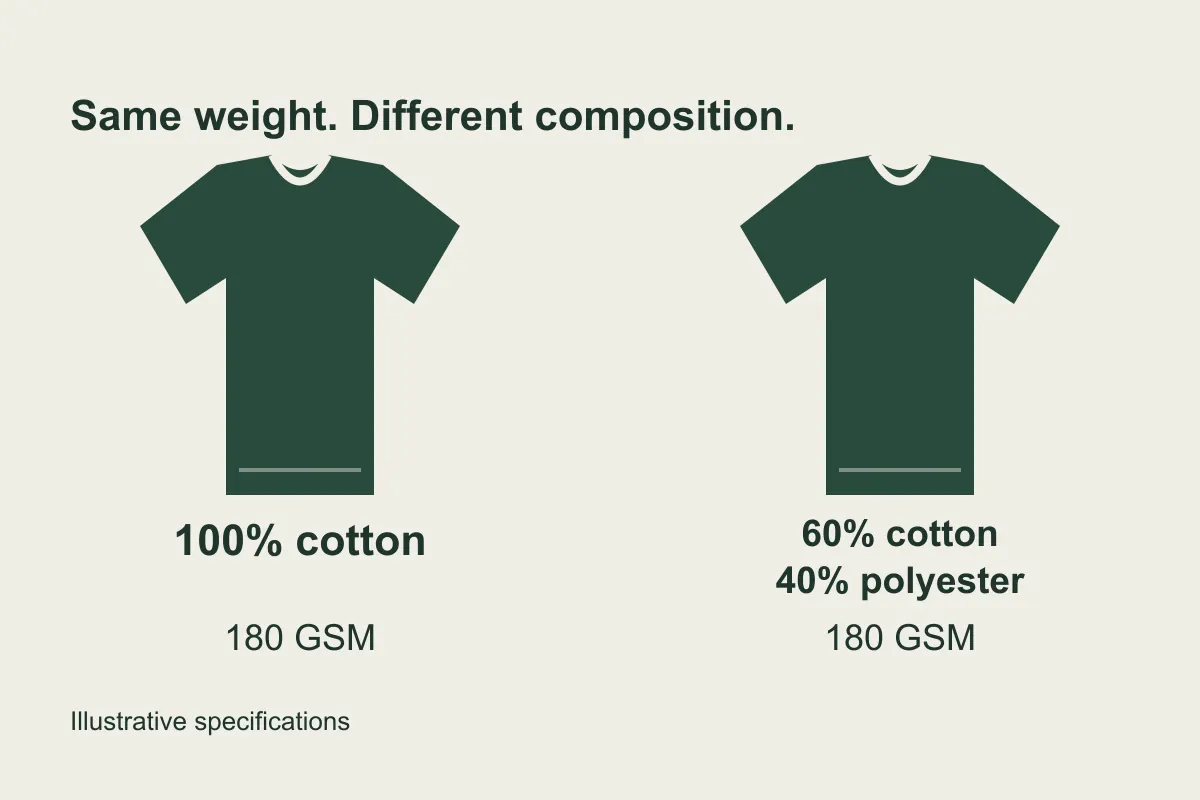
Consider two illustrative proposals: a 100% cotton T-shirt and a 60% cotton, 40% polyester T-shirt, both described as 180 GSM. These are examples only, not DRIOV product specifications.
The matching weight tells you that both fabrics have the same stated mass per unit area. It does not make their yarns, knit density, surface treatment or garments equivalent. The fabric GSM guide explains how to use weight alongside those other details.
Before attributing a difference in feel or quotation to polyester content, compare these conditions:
| Comparison item | Align where practical | If the proposals differ |
|---|---|---|
| Yarn and knit | Yarn specification and the same named construction | Record the difference before comparing surface and body |
| Finished weight | GSM, stated condition and agreed tolerance | Separate a weight change from a composition change |
| Colour and finish | Comparable shade and disclosed surface or hand-feel treatment | Review the actual colour and finish intended for the order |
| Garment | Sample size, measurements and construction details | Distinguish fabric drape from a different pattern or fit |
| Decoration | Artwork, dimensions, placement and desired effect | Keep process adjustments visible in the proposal |
| Care | A procedure permitted for both garments | Treat different care requirements as part of the buying decision |
You can still choose between different proposals. The point is to know which complete option you prefer, rather than assuming composition explains every difference.
Review print on the chosen colour
Both cotton and cotton-polyester fabrics can be printed, but the production approach must suit the substrate. A different blend, yarn surface or finish can change the physical result even when the source artwork is identical.
For screen printing on polyester-containing garments, ask about dye migration: garment dye moving into the printed ink and changing its colour. Light or white artwork can make this particularly noticeable. Heat, garment dyes and the selected ink system are relevant, so a successful print on a different T-shirt is not approval for the proposed one.
Ask the printer to confirm the ink approach and assess a print on the actual garment colour. Review the finished result after the proposed curing process and at any further observation stage agreed for the project. Record colour, opacity, edges and hand feel. Do not choose a universal curing temperature from the fibre percentages.
The screen-printing service guide sets out the garment and artwork information needed to discuss that combination.
Read the garment after care
A blend is not a promise of zero shrinkage, and a 100% cotton label is not a shrinkage percentage. Knitting, processing, finishing, sewing and care all contribute to dimensional change.
First read each proposed care instruction. If both garments permit the same procedure, use it for a comparable review. If one requires care that does not suit your customer or uniform programme, that is a selection issue; washing it outside its instructions does not produce a fair comparison.
Record appearance and dimensions separately. A T-shirt may retain its measurements while developing an unwanted surface, or remain visually clean while its proportions change. Look at body length and width, neck shape, seam alignment, surface fuzz, creasing and the decorated area against the original sample record.
Where a measured property matters, agree the method and acceptance criteria for an identified sample. An informal care trial can inform preference, but it should not be presented as a laboratory rating or a guarantee for every colour.
Compare complete quotations
Request both options for the same quantity breakdown, artwork, garment construction and approval scope. State whether printing, labels and packaging belong in the quotation so a fabric-only figure is not compared with a finished-garment price.
A blend is not automatically the lower-cost option. Different yarns, fabric treatments, garment details and printing requirements can change the quoted scope. Ask what changes with the alternative and what remains fixed; do not apply a standard price saving to the word “polyester.”
Keep the chosen fabric reference connected to the quotation. If a later proposal changes the ratio, finish or garment source, identify whether a new sample review is required rather than silently substituting it.
Choose for the intended T-shirt
If 100% cotton content is a firm requirement, shortlist fabrics that meet it and compare their finished garments. If composition is flexible, compare a named blend against the cotton option for the qualities that matter to the project.
For a printed merchandise T-shirt, the artwork and actual garment colour belong in the decision. For a frequently laundered programme, care compatibility and appearance after the agreed procedure may carry more weight. For a particular silhouette, use the completed garment to decide whether the fabric provides the intended body and drape.
Browse the blank T-shirts for published product specifications. Then request a quote with the intended use, preferred composition or open blend choice, garment direction, artwork and quantity breakdown. Identify the features that must stay fixed so the material recommendation answers the project you plan to buy.